2021 STUDIO Urban Synergism 协同城市
授课方式 :北京线下课程类别:建筑类型学与城市设计评估,研究型项目项目尺度: 城市尺度面向学生类型 :有城市设计和研究型项目需求的学生学生水平要求:1. 有发现城市矛盾点的能力(有助于评估)2. 逻辑思维能力较强3. 建议有基本的GH基础 (非必要)课前准备 :初步了解遗传算法(evolutionary algorithm)。建议掌握Rhino和GH基础命令,安装Rhinoceros 6.0(内置Grasshopper)。推荐教程:https://www.plethora-project.com/education/2017/5/31/rhino-grasshopper建议出图相关软件:建模分析:Rhinoceros and Grasshopper 效果图:Keyshot, Adobe Photoshop 分析图:Adobe Illustrator Layout:Adobe Indesign (下载场地数据可能需要翻墙,请准备翻墙软件)授课时间:2021/8/6-2021/9/4
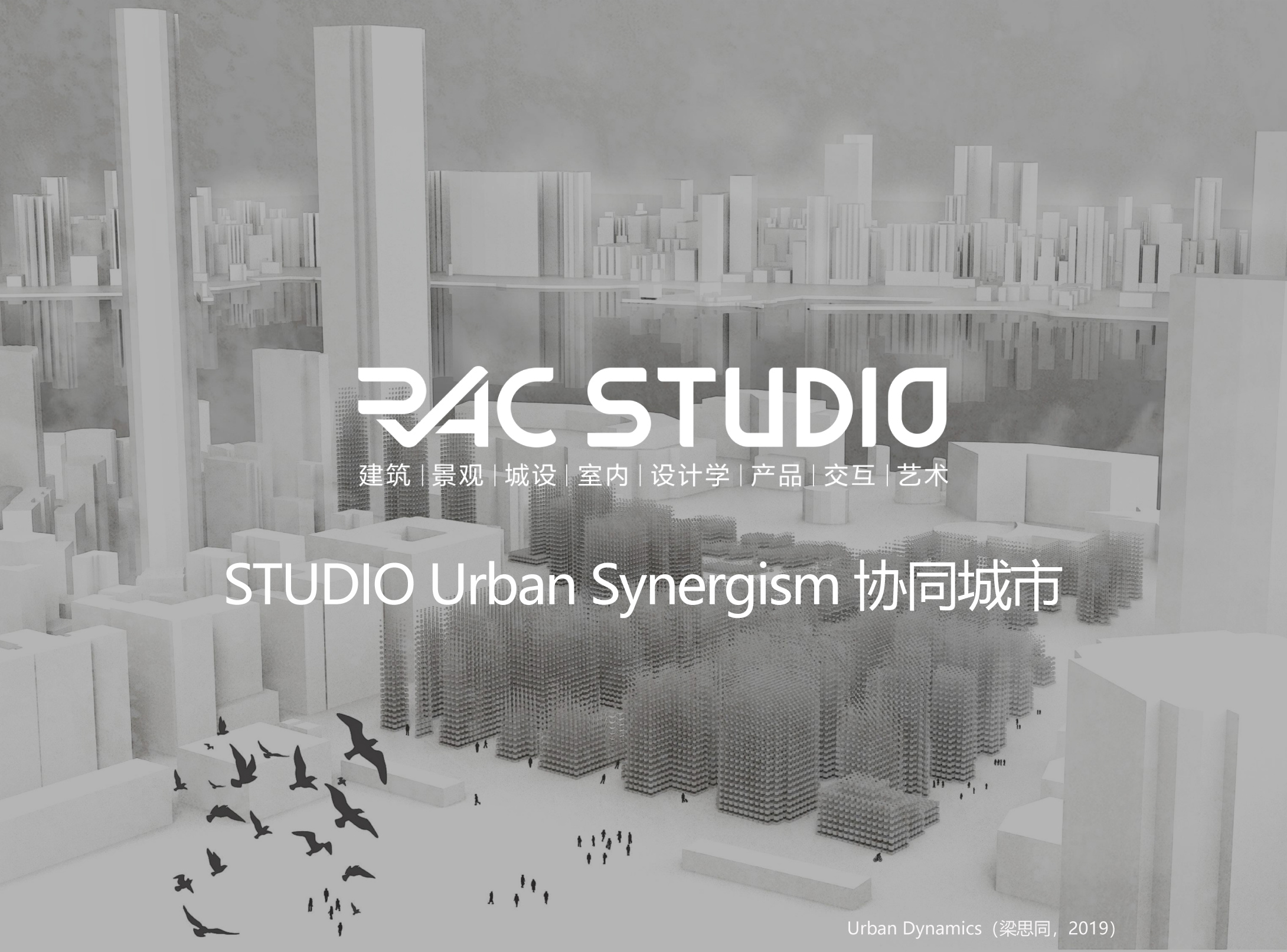
Studio背景Urban Dynamics(梁思同,2019)As an effect of mass production and globalization over the last century, the modern city has increasingly taken on repetitious qualities, sharing a multitude of characteristics to often establish indistinguishable urban areas throughout the world. Therefore, urban synergism will focus on creating alternative developmental methodologies for urban design to combat the increasingly homogenous qualities of many existing, new and emerging cities throughout the world.We will investigate utilizing environmental, social and metabolic forces as inputs of spatial organization and differentiation, in order to explore and generate malleable-phenotypic architectures uniquely developed for the selected site. Meanwhile, we will explore the processes of morphogenesis: a process by which living organisms come into being developed their form, and synthesize their systems, through dynamic qualities of complex, non-linear processes.在上个世纪大规模生产和全球化的影响下,现代城市越来越具有重复性、具有多种特征,经常在世界范围内建立难以区分的城市区域。 因此,城市协同增效将专注于为城市设计创造替代性的开发方法,以应对全球许多现有的,新兴的城市日益同质化的问题。我们将调查利用环境、社会和新陈代谢的力量作为空间组织和分化的输入,以探索和生成针对所选地点独特开发的可延展表型架构。 同时,我们将探讨形态发生的过程:通过复杂,非线性过程的动态特性,建筑机体得以形成并合成其系统的过程。
影响空间组织的环境因子(梁思同,2019)
建筑类型学与遗传算法(梁思同,2019)Studio内容课程目的 Studio Objectives:掌握基于遗传算法的城市类型学组合研究方法,并针对城市类型学的不同组合来评估并选取程设设计最佳方案。应对的问题 Research Question:解决城市设计中的建筑类型的相互适应与协同问题基地信息 Context:各组根据design drivers自选场地方法与媒介 Design Methodology:遗传/进化算法(Evolutionary/Genetic Algorithm)Studio安排Phase1 提取场地周边的影响因素并对其进行编码Phase2 建筑类型学研究Phase3 结合遗传算法生成城市prototypePhase4 对不同结果进行评估并选取最佳结果Phase5 出图表达,实体模型Studio成果· 表达影响因素的分析图· 建筑类型学Catalog· 遗传算法结果分析图· 不同结果的评估对比分析· 效果图*· 实体模型(自愿)Urban Prototype (Tokyo, Japan, Tom Verebes)Design variations driven by design drivers(Tokyo, Japan, Tom Verebes)Architectural typologies distribution (Tokyo, Japan, Tom Verebes)Architectural typologies distribution (plan)(Tokyo, Japan, Tom Verebes)Studio时间安排:Week 1Course 1 (Lecture)Studio Intro+分组+软件/插件安装+Rhino/GH/Keyshot入门Assignment:熟悉入门内容和软件使用Course 2 (Lecture)场地选取+选取影响因子Assignment:建立场地模型Week 2Course 3 (Lecture)分析影响结果+整合多个影响因素Assignment 完成各组的影响因素脚本Course 4 (Group)设计建筑typologyAssignment 调整确定建筑typologyWeek 3Course 5 (Lecture)建立遗传算法模型Assignment 各组测试模型Course 6 (Group)根据不同评价标准选取相应的urban prototypeAssignment 选取+评估不同结果Week 4Course 7 (Group)最终形态优化Assignment 完成影响因子分析图绘制Course 8 (Group)效果图+实体模型(自愿)+调整图纸Assignment 出图Course 9 Final Presentation