授课方式 | 上海线下
课程类别 | 建筑学,城市设计或景观学专业的高年级学生,能适应较高强度和较快节奏的项目推进过程并对建筑和自然的关系非常感兴趣,项目类型和尺度不限
课前准备 | Rhino, Adobe Creative Suite, Grasshopper (Optional), Vray etc.
授课时间 | 2020年7月4,持续4周时间
Studio人数 | 10-16人
注:studio课题为竞赛课题,主要以完成项目为主,学员想要投递竞赛,需自行投递。
Reading List:
Ian Mcharg. Design with Nature. (Sea and Survival; The City: Process and Form)
Kevin Lynch. Site Planning (2.Site Form and Site Ecology; 9.Sensuous Forms).
Christian Norberg. Genius Loci: Towards a Phenomenology of Architecture. (I.Place; II.Natural Place)
Kenneth Frampton. “Towards a Critical Regionalism: Six Points for an Architecture of Resistance”
Junya Ishigami. Another Scale of Architecture
Junya Ishigami. Another Nature.
Junya Ishigami. Freeing Architecture.
Junya Ishigami. How Small? How Vast? How Architecture Grows.
James Corner. Recovering Landscape.
竞赛 背景
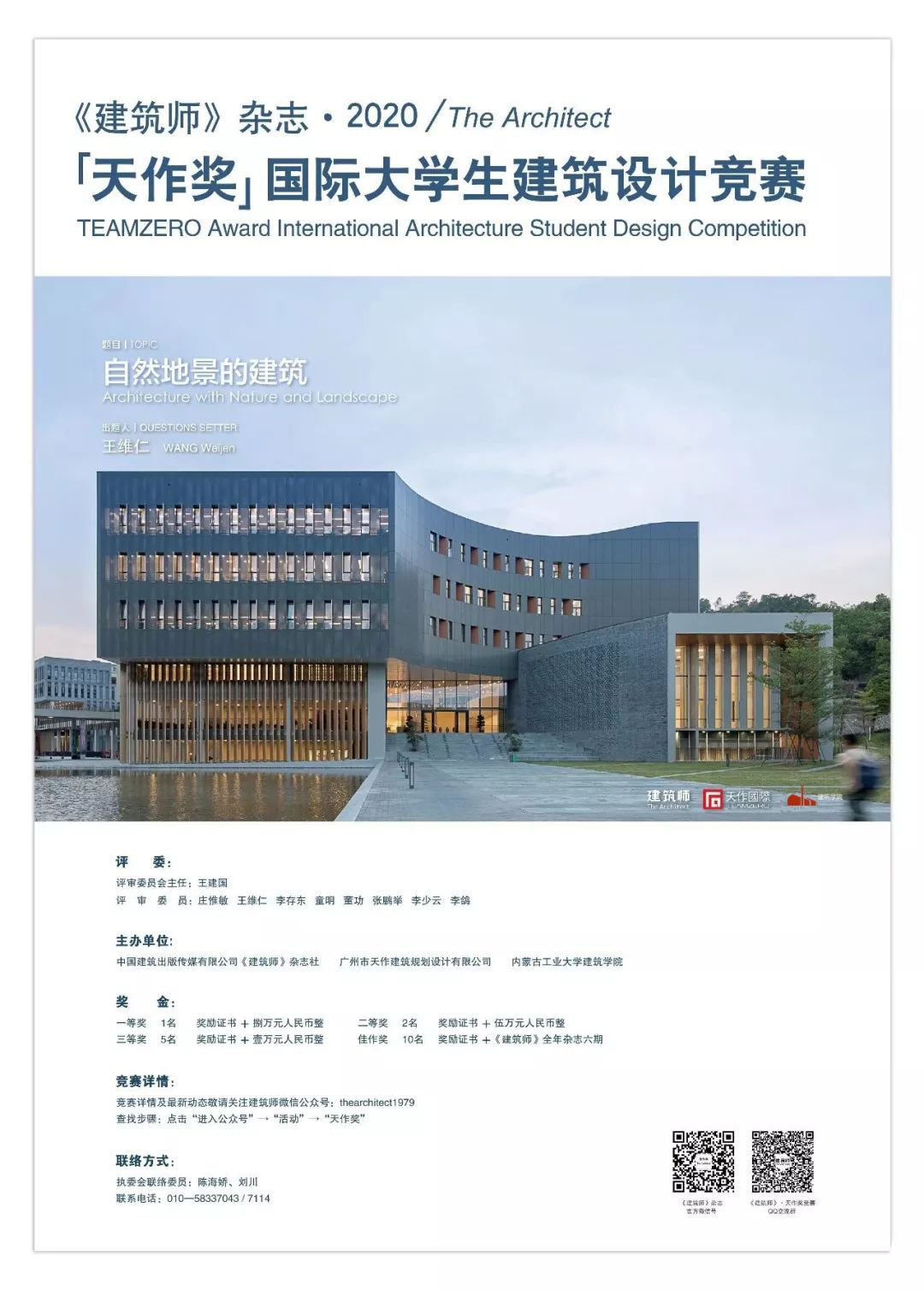
竞赛详情见下方网站 http://www.shejijingsai.com/2020/02/369975.html
Architecture globally is now facing critical challenges on how to work with nature that relate more broadly to the human condition in the face of environmental and social crises. For the past hundred years, in the context of economic development and its un-limited consumption of natural resources, land reclamation has drastically turned major forests, first into farmlands and then eventually into built-land for development. Confronted with global warming and the increasingly fragile ecology of our earth, how can architecture coexist with natural environment? With global resource depletion and social in-justice, how can architecture sustain humanity and ecology by coordinating with communities, respecting nature and landscape, facilitating the recycling of resources and creating a sharing society?
After nearly a half-century of accelerating urbanization, the scale of expansion for buildings and cities in China has been drastically multiplied reaching a speed that has never appeared in the human history before. By transforming the agricultural and culture landscape into speculative real-estate for construction and despite the proliferation of green building regulations for implementing sustainable strategies we are actually moving further away from an architecture of landscape and nature. With a rich cultural background comprising art, literature and philosophy historically developed in relation to nature, how could a new architecture in China contribute to discourses of landscape and sustainability that are rooted in nature and ecology?
An architecture of landscape integrates architecture with the landscape. It is an integral part of an ecological system working together with geology and topography, location and hydrology, green plants and other organic lives. Beyond addressing the visual pleasure of certain landscape architecture, an architecture of landscape makes architecture part of the cultural landscape of place. The cultural landscape of place comprises relationships with production and inhabitation as well nature and ecology. An architecture of landscape is both landscape architecture as well as architectural landscape. It requires great attention to the variation of contour and datum levels, a good understanding of water flow on and beneath the ground, knowledge of the movement of the sun and the change of the wind, and a strong perceptual and ecological understanding of the trees and forest, insects and floras.
An architecture of landscape not only addresses the visual integration of architecture with landscape, it also addresses the functional integration of architecture into its natural environment including ventilation and lighting, water, energy and resource recycling within the natural ecology. At the same time, an architecture of landscape integrates materials and construction with nature exploring a sustainable tectonics of poetic beauty. An architecture of landscape could most likely be low-rise, however, multi-story or tall buildings could be adopted strategically as they may help conserve land for nature. An architecture of landscape is phenomenological and perceptual. It is a natural landscape of memory with a sense of place. An architecture of landscape reflects the aesthetics of authenticity integrating a culture of simplicity with nature and its ecological environment. An architecture of landscape also stresses the beauty of societies with openness and justice allowing communal and civic participation in the building up of the foundation of nature conservation and environmental protection.
Choose a building site of around 1000㎡ from an urban-rural environ ment of 10000㎡, in which you understand the transformations of its culture and natural landscape through studies and land-traces.
Weather it is a place among nature or a piece of natural landscape within a city, avoid choosing environmental or ecologically sensitive site that should not be built upon, without a strong reasoning. You are to identify the meaningful natural elements and cultural landscape: hillsides and valleys, trees and fields, streams and lakes, insects and fishes, cottages and stone-walls. Within the 1000㎡ chosen site, design a building or a building complex with floor area of no less than 100㎡ and no more than 1000㎡. Your design should have more than one floor-level. It should be used for certain functions such as living, working, learning or experiencing. You are to think critically on how to achieve a symbiotic relationship between architecture, landscape, ecology and environment, illustrate in your design how the site and architectural spaces interact with natural elements of topography, tree, water, land and climate. Please consider the changes your building undergoes from day to night and through the seasons. Consider how water and air flow through your building. Pay attention to how sunlight and shade moves in your spaces. Figure out how the building can shelter you from rain, snow and wind, while also facilitating air and light circulation within so that the building breathes.
The most important thing is to imagine, 100 years later, how an architecture of landscape can sustain its symbiotic relationship with nature, when the human condition and events have transformed and renewed, and the new life of architecture begins.
当下全球建筑共同面对的关键性挑战是:建筑和人如何与自然共生。数百年来发展模式经济对自然的无尽消费,当森林逐渐开垦为农田再转变为建筑,在气候暖化生态环境日益脆弱的危机中,建筑和人该如何与自然共生?面对全球资源剥夺与社会公正的挑战,建筑应该如何尊重人与社区、自然与生态,反映一个资源循环共享的社会?
经过近半个世纪的城市化发展,中国建筑与城市扩张的数量与速度,是人类历史上前所未有的。当我们逐步将阡陌交通的农业地景与小桥流水人家的文化地景,改变为千篇一律“三通四平”的规划用地条件,无论我们增加多少绿建筑和日照间距的规范指标,我们距离自然生态的建筑理想,其实是越来越远了。继承了自然哲学与文人山水的文化,面对21世纪的全球生态与环境危机,作为发展先锋的中国新建筑,除了规模、技术与形象,能对世界建筑环境的永续发展提出什么样的论述?
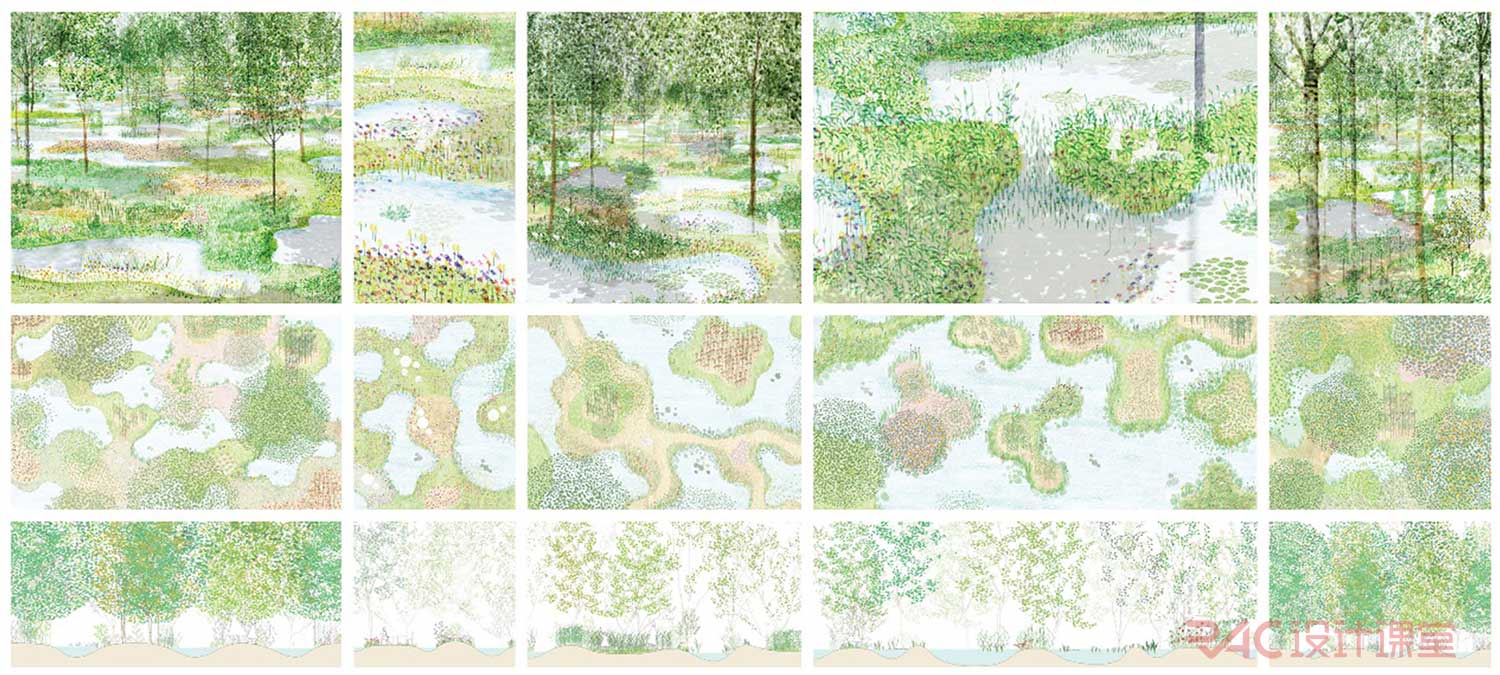
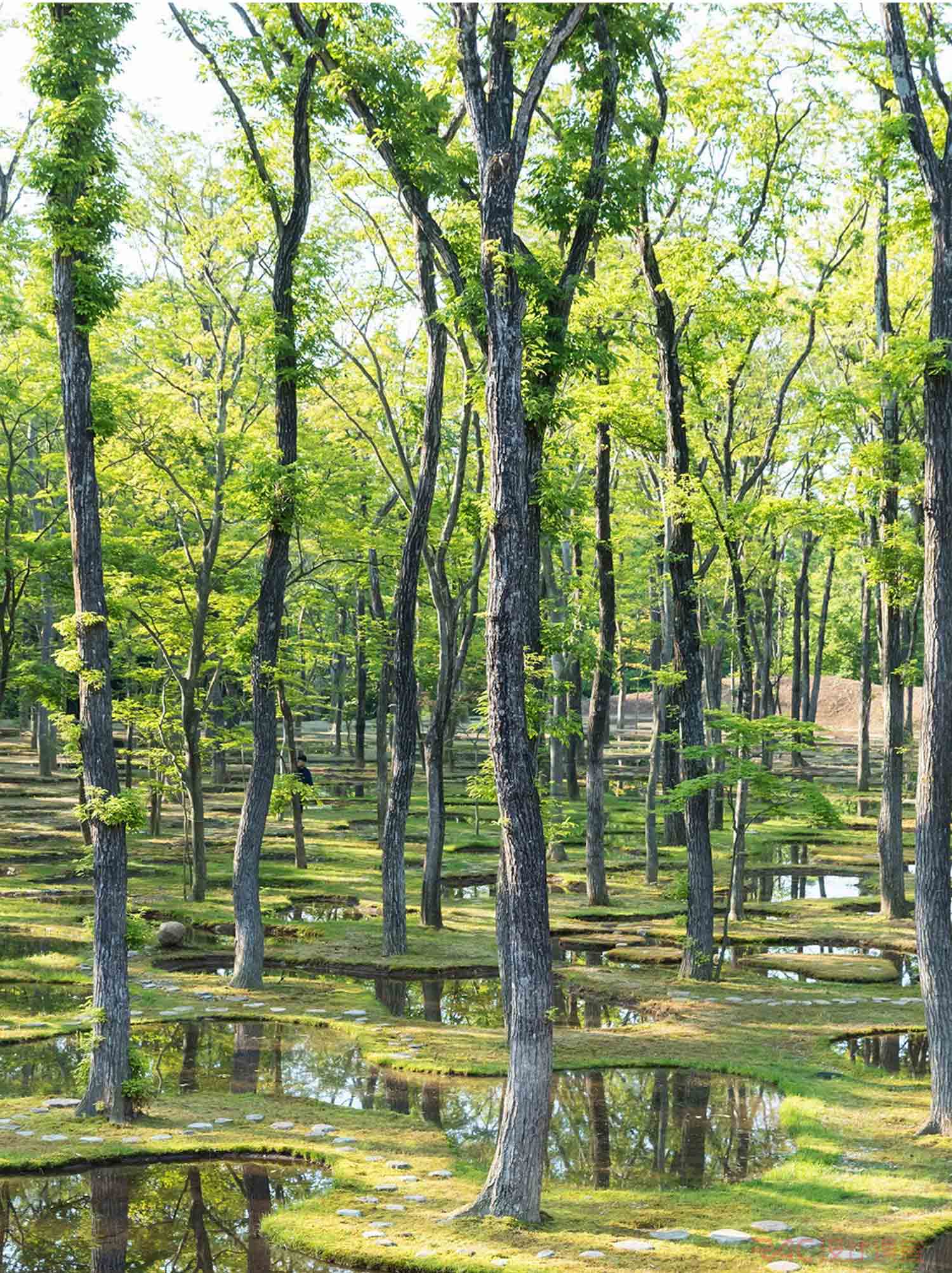
地景的建筑让地景与建筑成为整体,强调以地质地形、风水水文、植物与有机生命共同形成的生态关系。超越以观赏为主体的园林景观建筑,地景的建筑让建筑成为能反映自然与生态、生产与人居的人文地景。地景的建筑同时也是建筑地景与景观建筑,建筑不但对地形等高线的高程变换保持敏锐,理解地表和地下的水流变换,掌握阳光阴影的移动与四季风向的变化,同时也对大树与林木、虫鸟与花草,保持视觉、听觉与嗅觉的灵敏。
地景的建筑不只是重视地景形成的视觉整体,同时强调经由通风和采光、水和能源的循环,与自然生态形成的功能整合。地景的建筑同时思考与自然结合的构造与材料,探索建构的可持续合理性与诗意美学。地景的建筑经常是低层的,却也采用多层或高层作为一种策略,节约土地保育更多的自然地景。地景的建筑是现象学与感知的,是记忆和场所感的自然地景;地景的建筑反映真与善的自然美感,让简单朴质的文化成为自然生态的一部分;地景的建筑同时也强调开放公正的社会性美学,让参与的公共性成为保育自然的基础。
在一个大约10000平方米范围,你能理解地景变迁与地文轨迹的城乡环境里,无论它是自然环绕的场所或是城市中局部保留的自然地景,避开不宜建筑的生态敏感区,选择一块面积约1000平方米的建筑场地,探索场所中有意义的自然元素与文化地景:山坡谷地、大树田野、溪流湖泊、虫鸟鱼蛙、农舍石墙……在这块1000平方米的建筑场地内,设计一栋或一组面积不少于100平方米,不超过1000平方米,不低于两层楼高的建筑,或居住,或工作,或学习,或体验,思考如何让建筑与自然生态与地景环境共生。在设计里表达建筑空间与场地与地形、树木、水土、气候等自然元素的互动,想象朝夕与四时节气的变换,水文与风向如何在贯穿建筑,阳光与遮阴如何在建筑里游移,建筑如何遮风避雨而同时吸纳吐气。
更重要的是,想象在一百年之后的人事更易, 建筑如何维系场所的自然地景,面对新人新事与环境永续和自然共生。
竞赛 解题
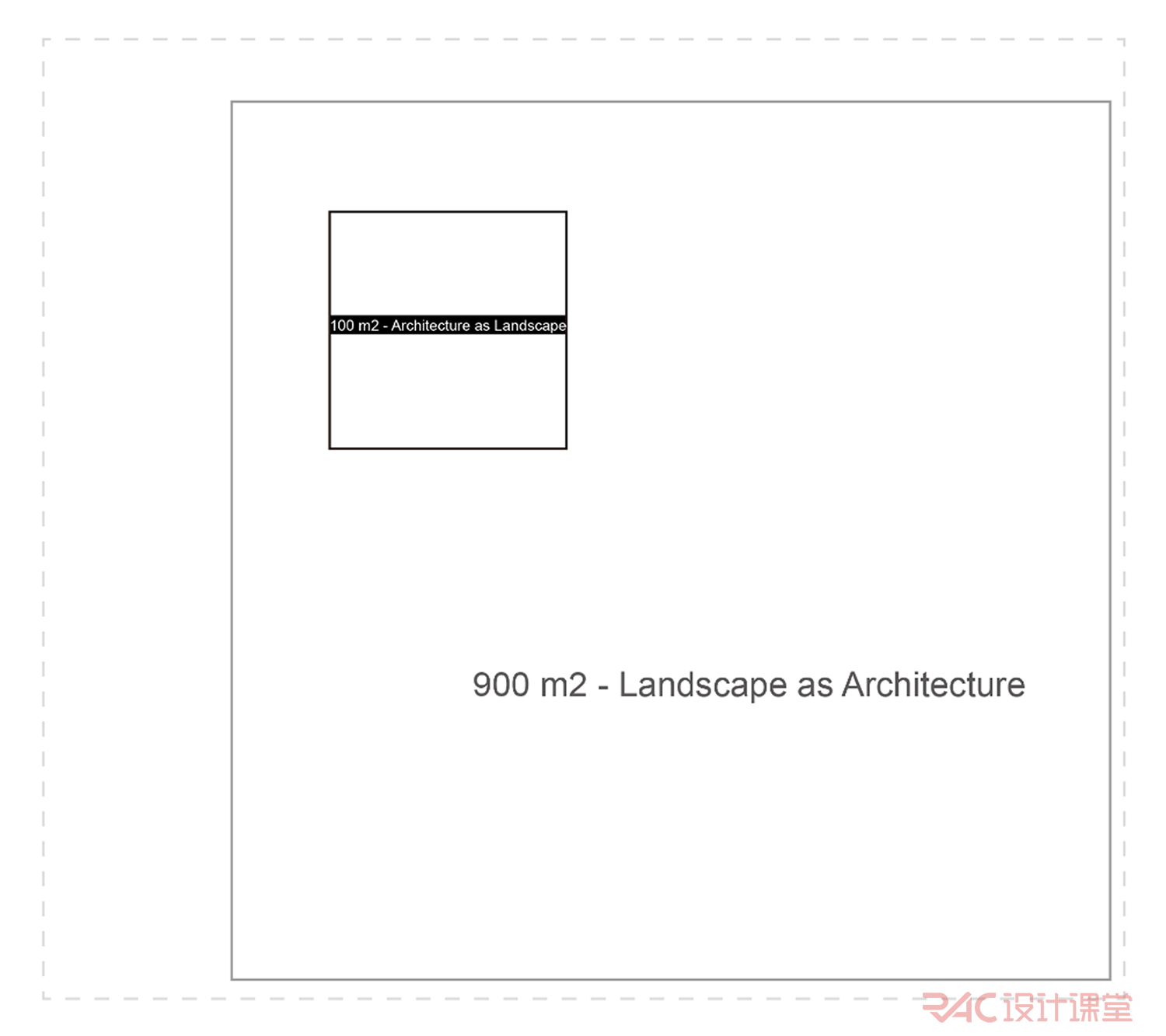
1:10 - Architecture as Landscape and Vice Versa
“在一个大约10000平方米范围内,选择一块面积约1000平方米的建筑场地,在这块建筑场地内,设计一栋或一组面积不少于100平方米,不超过1000平方米的建筑”基于自然背景下的建筑与景观在尺度上从来都是可以被想象的,竞赛解题从基于场地面积的设计要求出发,针对这样一种1:10的尺度关系,计划引领学生提出一个概念分别具体化在10000平方米大场地范围内的1000平方米建筑场地和其余9000平方米设计场地,以分别回应“Architecture as Landscape”和“Landscape as Architecture”with “Nature”。
Some Keywords (Maybe Useful…)
Landscape as Membrane/Interior/Experience/…
图像 附录