授课方式 :北京线下+线上
授课对象 :
a、Architecture, Interior Architecture专业学生需要补充中型或大型尺度项目如(Museum, Performing Art Center)的同学,以及需要相对复杂有一定深度的学生。
b、适合对于建筑理论以及建筑形式与材质有一定深度认识的同学,以及对于建筑Object有一定认知的同学。
难度提示 :★★★★★
课前准备 :
Reading: The Shape of Time, Building Mould Space, “Ultramoderne”: Or, How George Kubler Stole the Time in Sixties Art.
3D扫描建模软件:Recap.
建模软件要求:Rhino or Maya
材质建模软件要求:Zbrush and Keyshot or C4d
渲染软件要求:Keyshot or Vray or Octane Render
除了基础的Adobe制图,学生将学习相对复杂的混合制图模式(包括图像角度也将发生改变)打破常规的出图技巧,因此需要学生能接受并学习非常规的制图训练。
授课时间:2020年9月11日,持续4-5周
Studio人数:8人
报名条件 :已经签约RAC学员可用课时兑换;未签约学员咨询报名前咨询客服主页菌
Studio背景
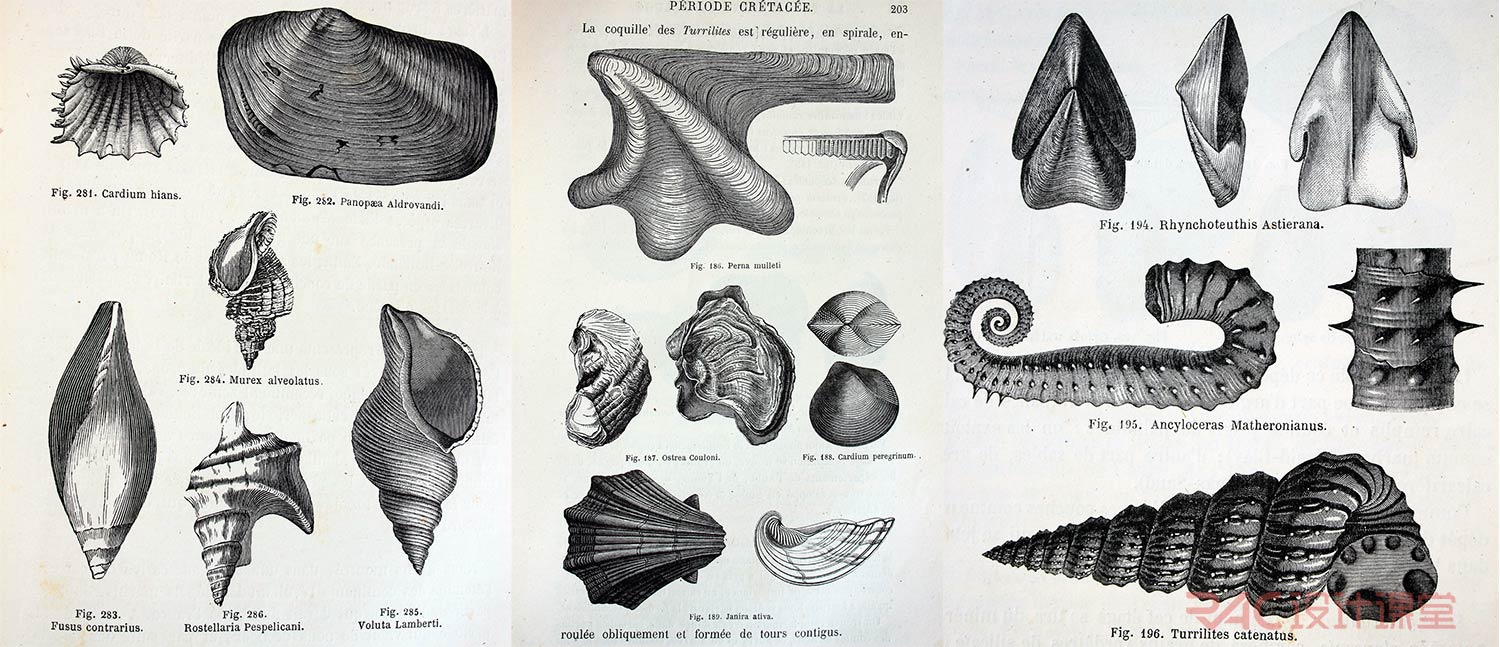
早期文艺复兴时期的Wunderkammer概念或德语中的“奇观之屋”也被称为“好奇的橱柜”。作为当代博物馆的先驱,Wunderkammer收藏了许多贵族艺术品,动物和地质标本以及考古和人类学发现,共同组成了Wunderkammer。Wunderkammer这一概念旨在强调为古代手工艺品提供的收藏橱柜与藏品的关系。橱柜与藏品的联系同时也暗示着建筑中shell与object的关系。那么从形式的角度,橱柜(空间)与藏品(物体)是如何联系的呢?Kubler曾对艺术的形式解释道:“没有形式就无法传达任何意义。每个含义都需要支撑,车辆或支架。这些都是意义的载体,没有它们,意义就不会从我到你,或者从你到我,或者甚至从自然的任何部分到任何其他部分。”那形式是如何传递的呢?从人类诞生以来任何人类所发明的工具都具备形式。起先形式的分类可以按照用途分类,但艺术诞生以后,形式的分类不仅可以按照用途分类也可以按照风格分类。不同时期的艺术风格也出现了与之对应Artifact. (艺术品)Artifact作为(物体)Object的蕴藏其对应时期的Figure(图形)or Profile(轮廓)。因此本质上图形与轮廓的重组与变异也造就古代手工艺品的多样性。回到最初的问题,橱柜与藏品的关系是物体与轮廓或图形的关系亦是载体与含义的关系。
“Every meaning re-quires a support, or a vehicle, or a holder. These are d1e bearers of meaning, and without them no meaning would cross from me to you, or from you to me, or indeed from any part of nature to any other part.”
“The figures and shapes described by the history of things arc moreover so distinctive that one asks whether artifacts do not possess a specific sort of duration, occupying time differently from the animal beings of biology and the natural materials of physics.”
“Now and in the past, most of the time the majority of people live by borrowed ideas and upon traditional accumulations, yet at every moment the fabric is being undone and a new one is woven to replace the old, while from time to time the whole pattern shakes and quivers, settling into new shapes and figures.”
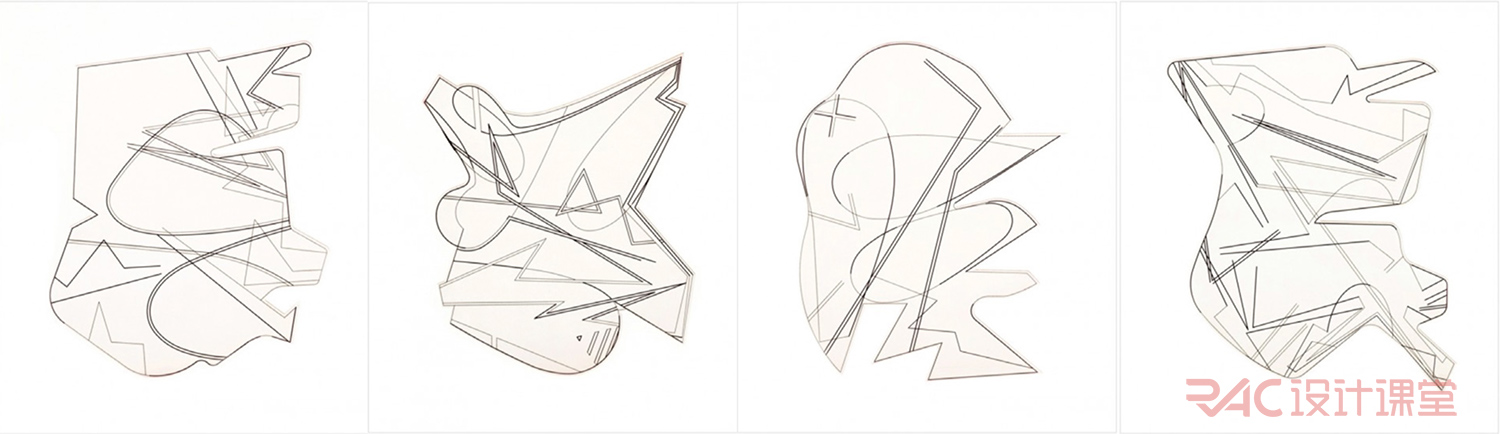
Michael Heizer, Hard Edge Etchings, 2016.
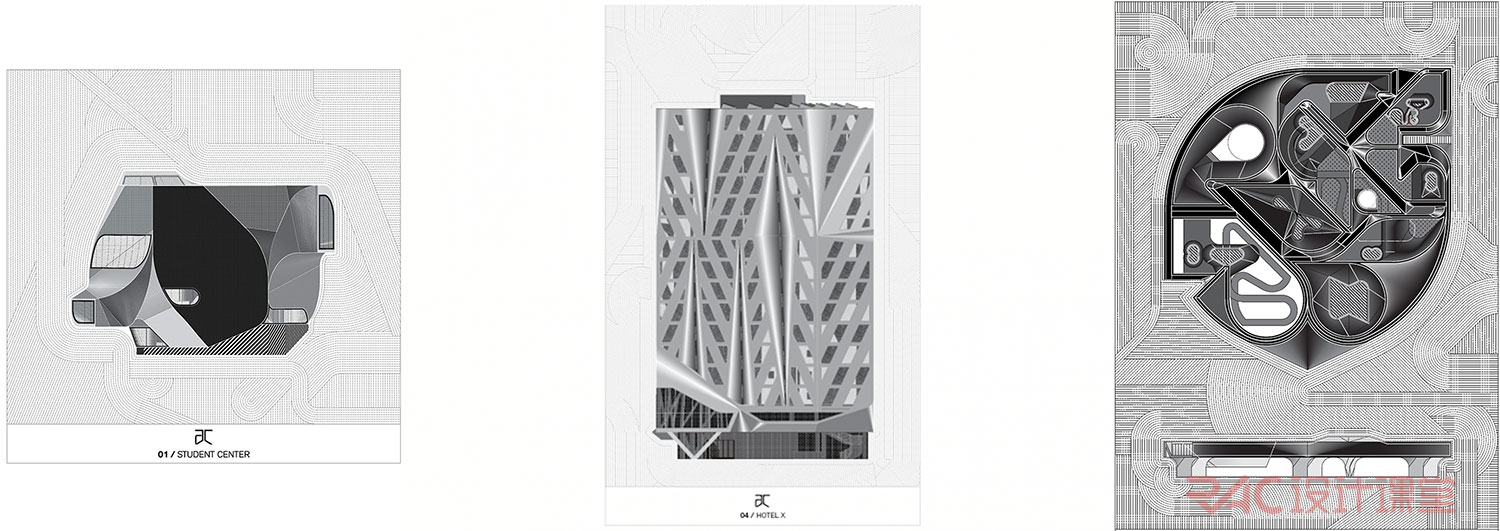
Displaced Buildings in Aperiodic City, Neil Denari , 2017.
Studio内容
Phase 01 重新建立与object的联系
Part 01 A选择一到三件仿制的化石并进行3D Scan 以及渲染.
B 或者通过化石的图像记录直接建模还原物体模型,并进行渲染。
Part 02 以3D扫描导入模型为基础重新建模并提取profile(轮廓)重新编辑,得到collection and collage of Profile.
Phase 02 设计化石载体以此容纳多个化石。
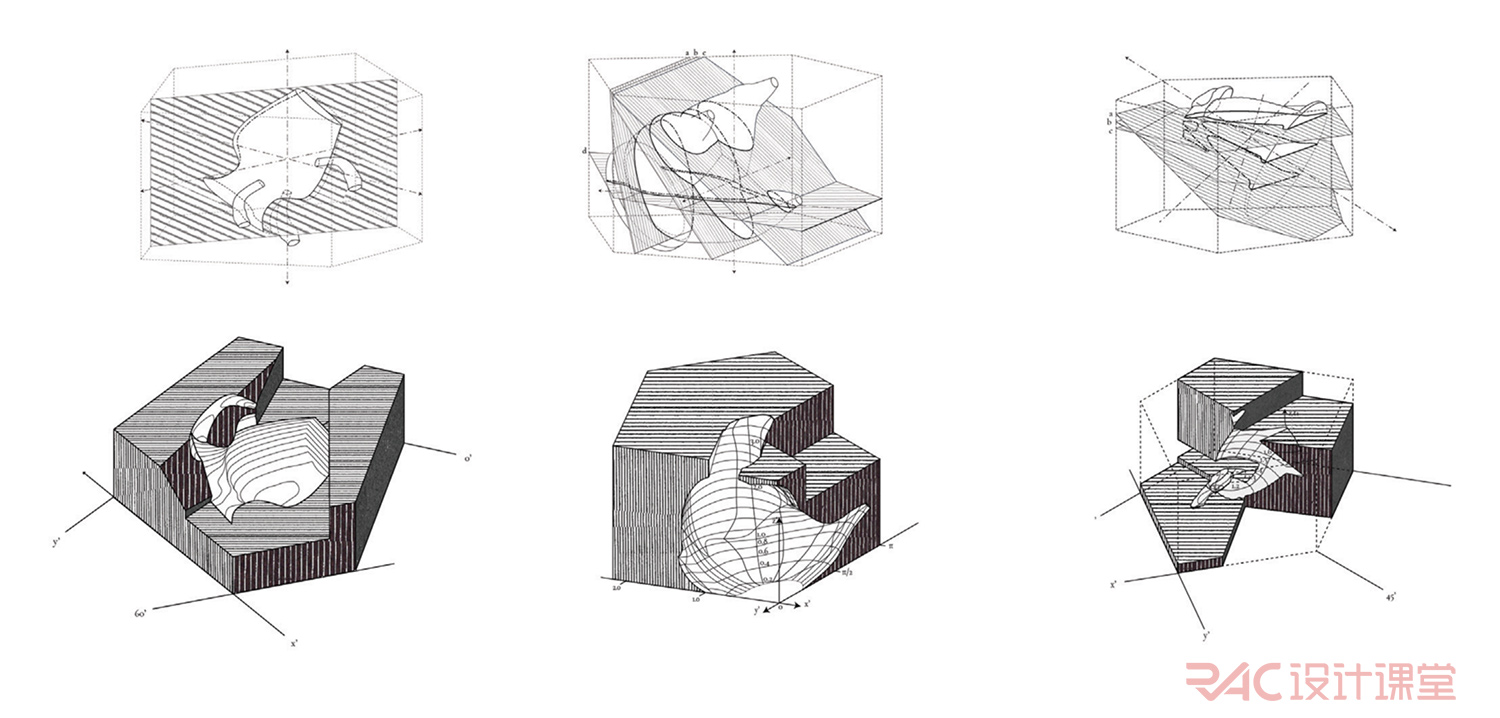
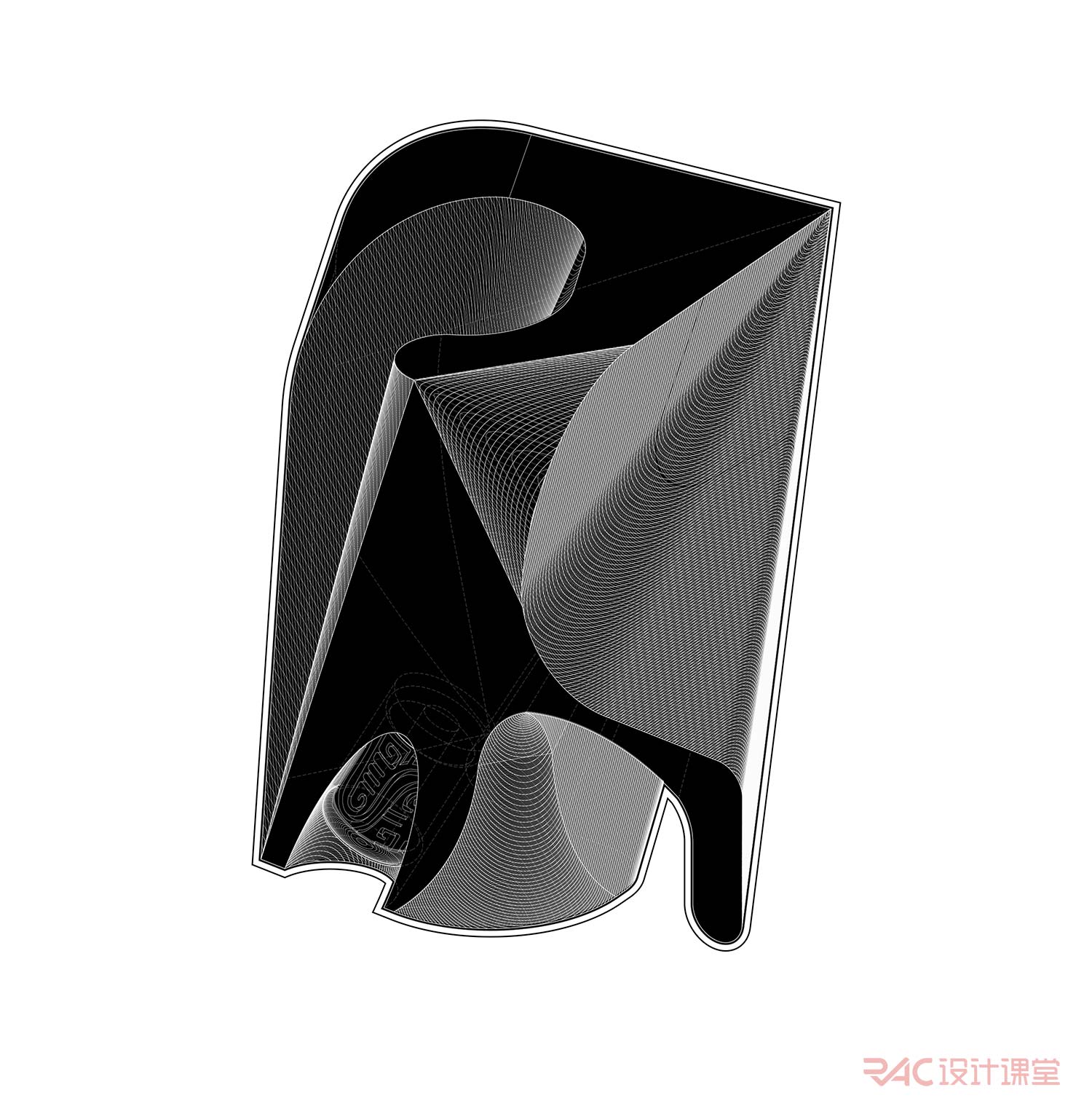
Part 01 通过将profile投影到XYZ三个维度建立新的shell(object)。
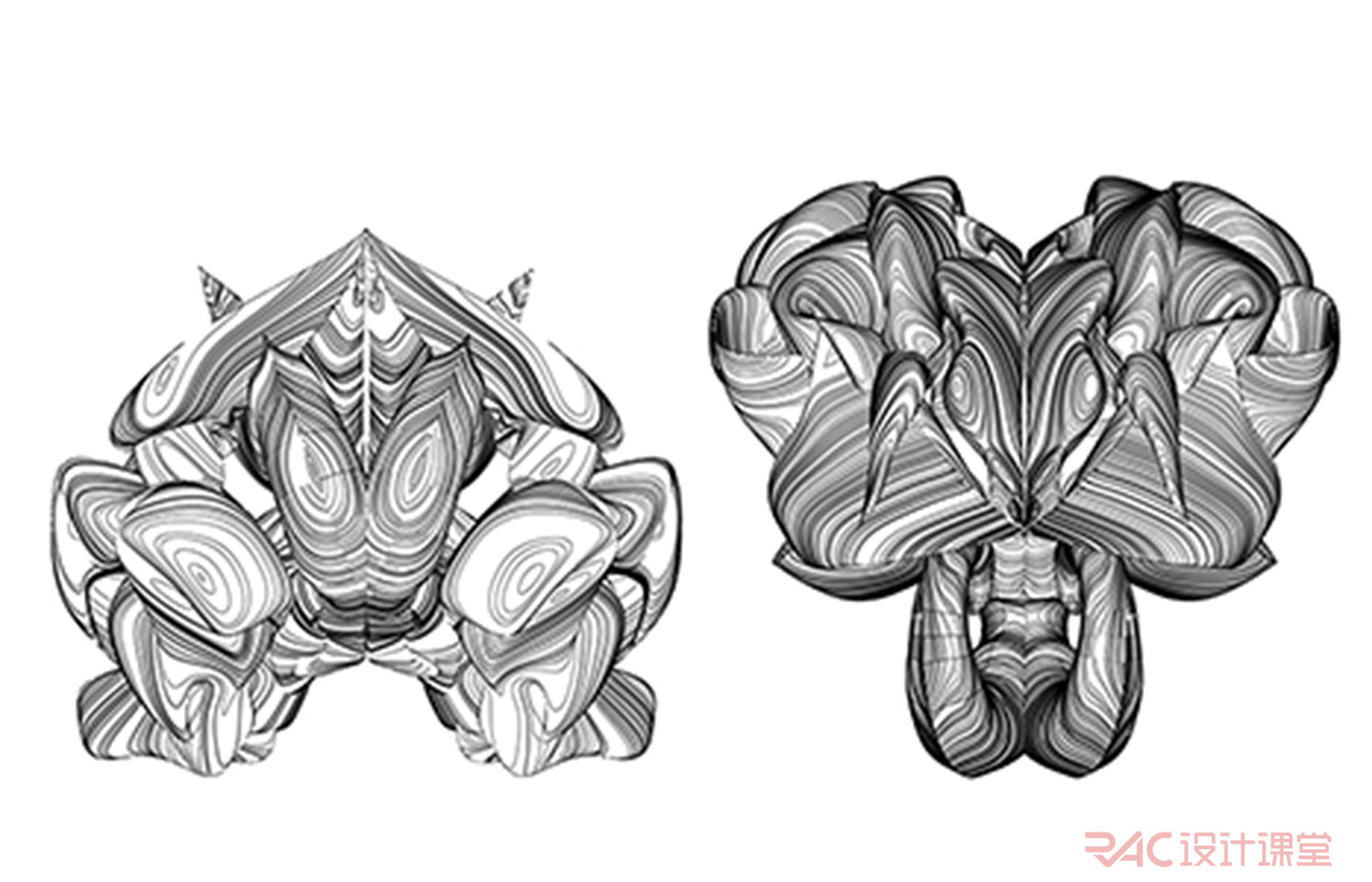
Credit from kutan ayata
Credit from Bingyu Guo
Part 02 再次以投影的的方式建立Void以此容纳多个化石物体。这一部分要求学生思考shell与Void 以及Void 与化石的关系。
Phase 03 利用Profile结合场地所在城市问题并回归场地。
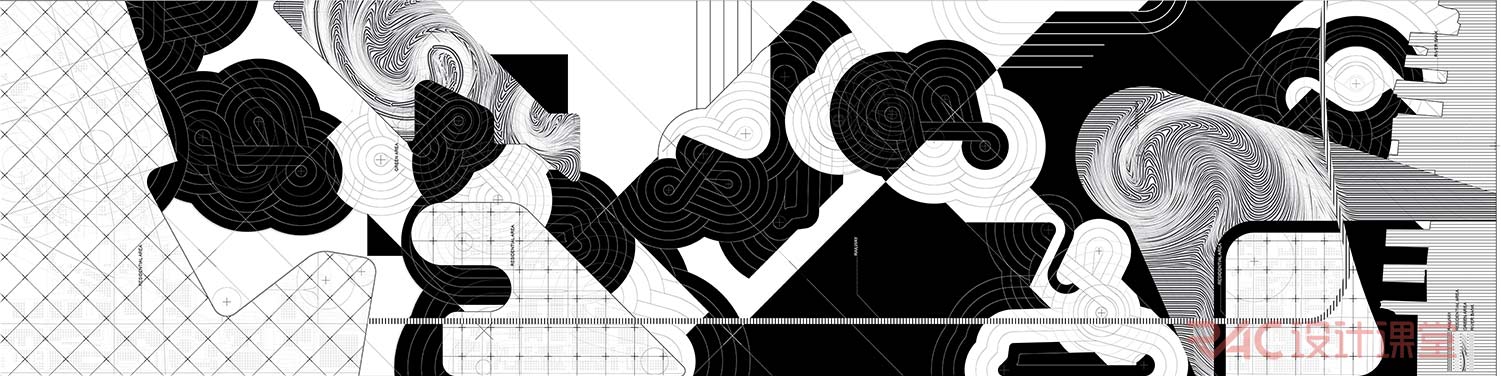
Credit from Bingyu Guo
Part 01 调研场地所在城市的问题,通过profile的二次重组与编辑重新解读场地与城市(context)的关系。(摆脱传统的图表以及数据分析模式)
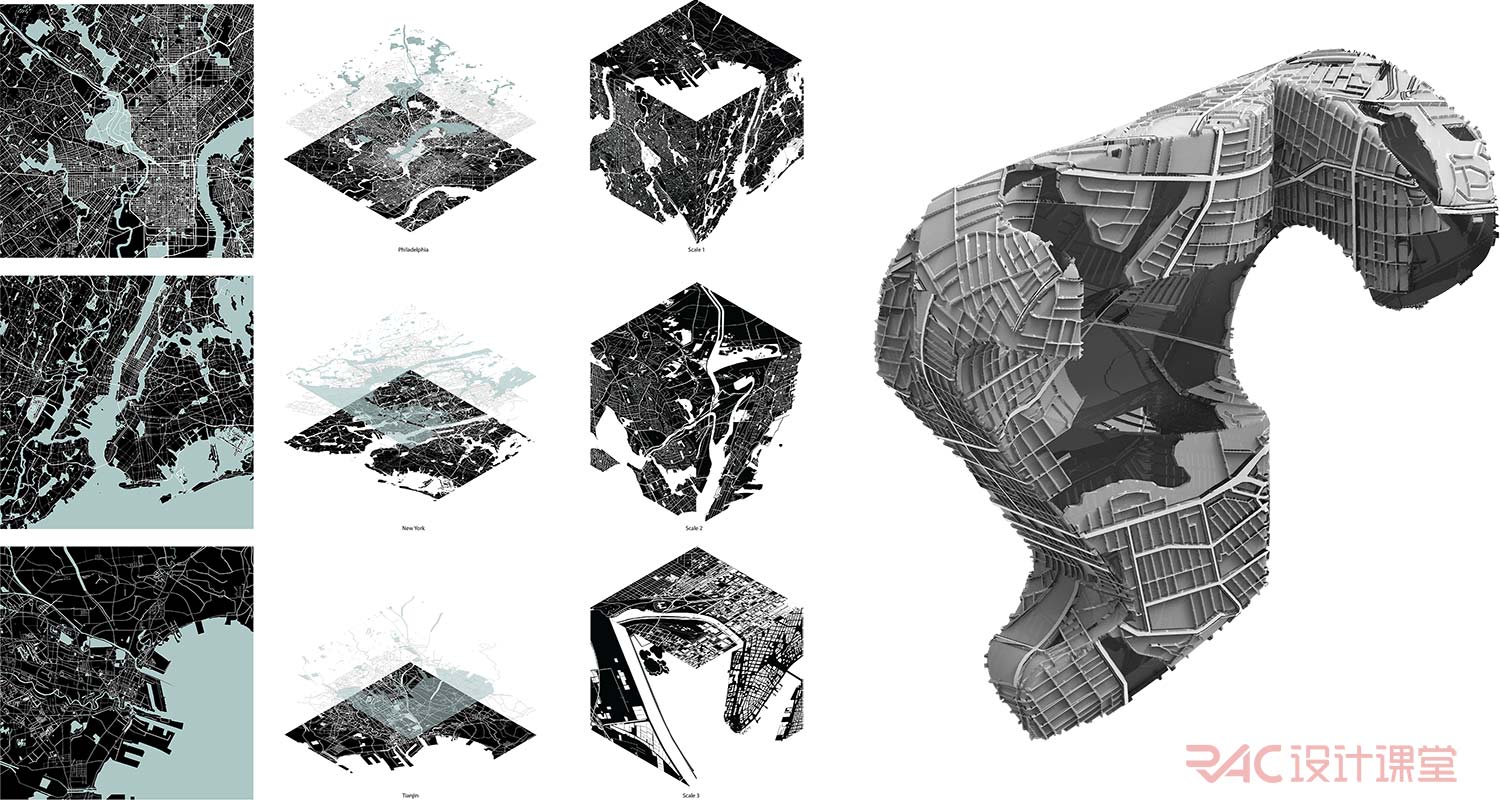
Credit from Bingyu Guo
Part 02 基于Phase02的思考,将shell与Object的关系通过Profile Projection(轮廓投影)的方式运用到博物馆与场地的空间关系, 以及博物馆重要共能与博物馆本身的空间关系。
Studio意向成果
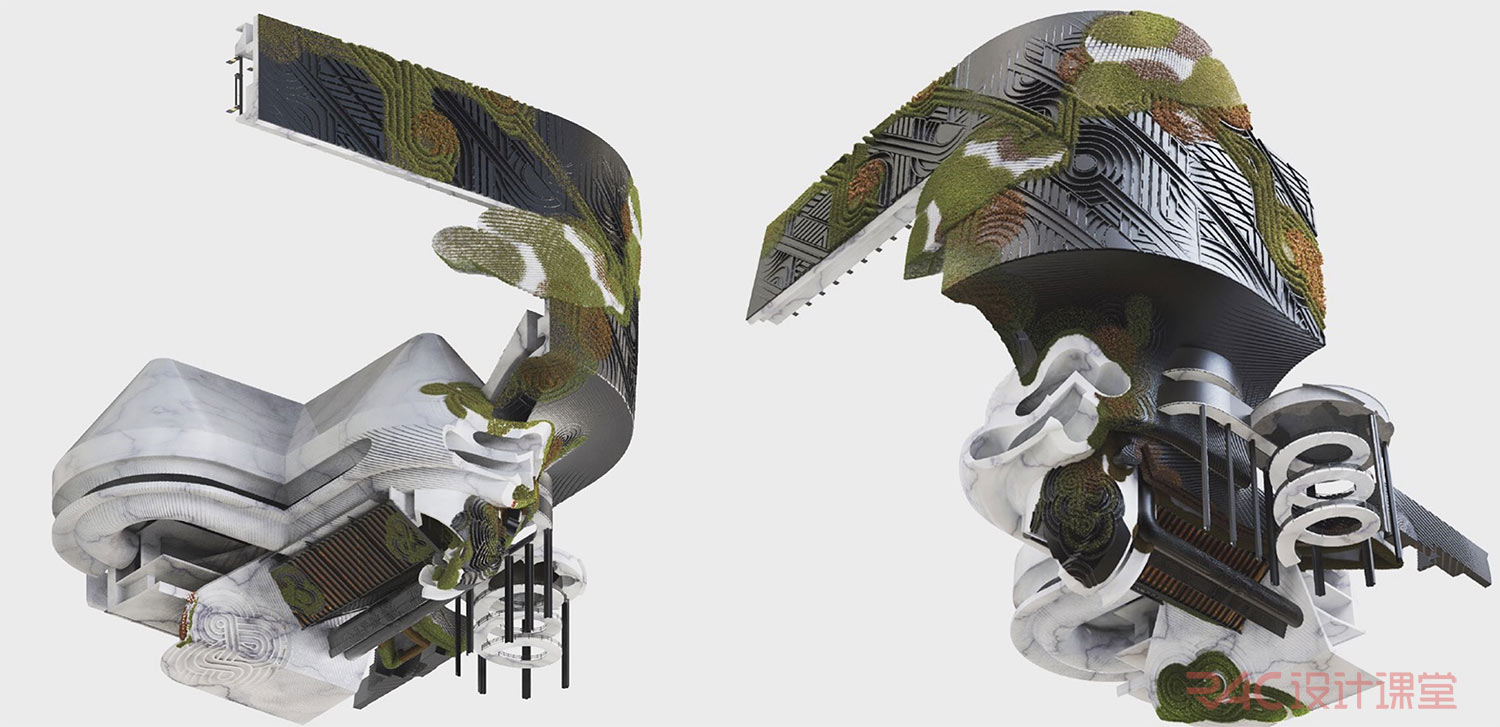
Credit from Bingyu Guo
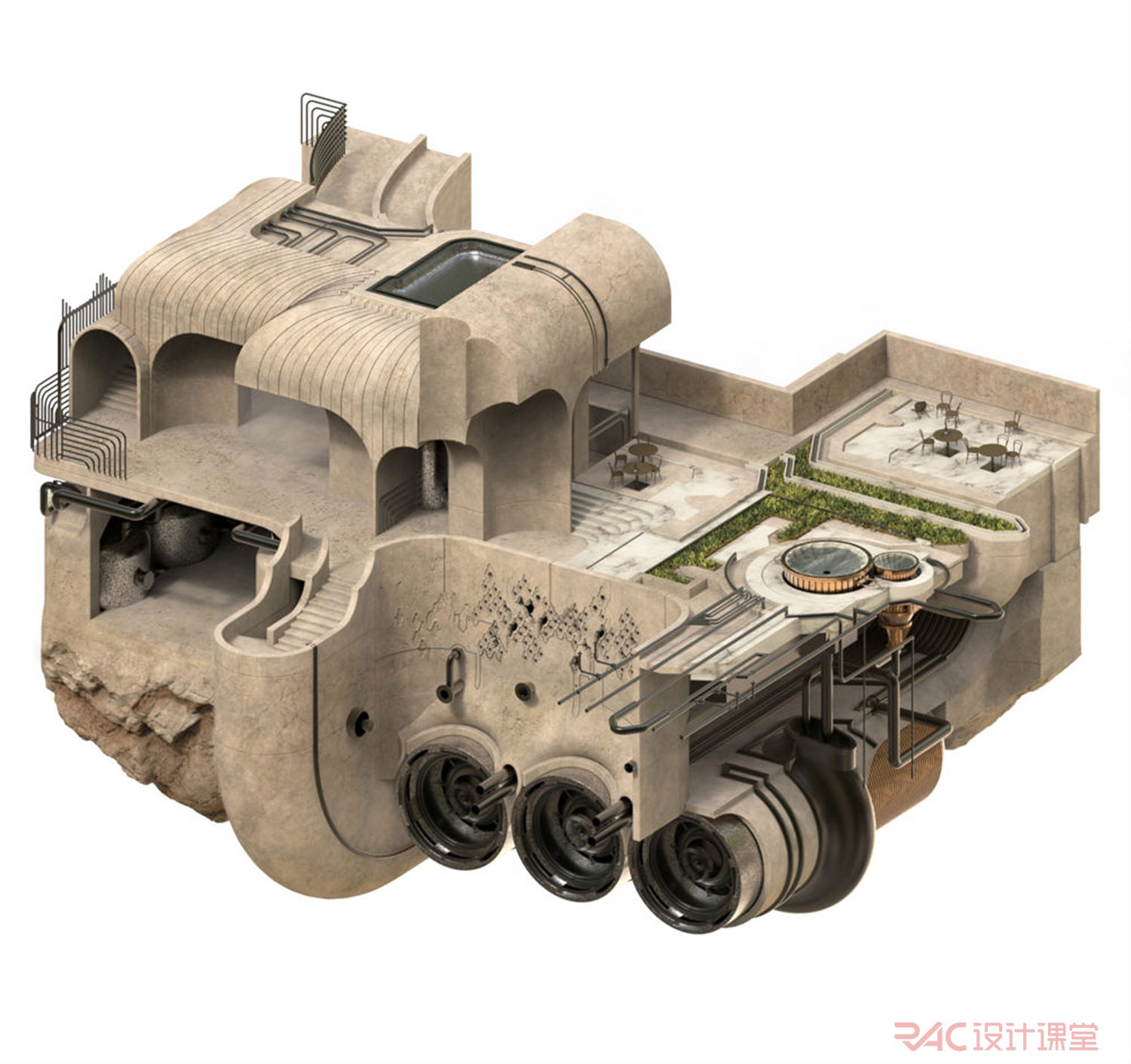
Credit from Pier Gardens
studio时间表安排
Week 1
C1 开题课程讲座:设计题目解读,背景介绍
Assignment:Research 化石收集分组作业, 化石的重构
C2 Profile 提取与编辑
Assignment:以重构的化石模型作为原型,提取并重组得到新的Profile。
Week 2
C3, 课程讲座:Profile Projection(轮廓投影)
Assignment:深化research部分,建立多个基于profile的Shell.
C4 分组讨论深化方案
Assignment:完成research部分,完成Shell.
Week 3
C5 中期公开汇报
C6 课程讲座:Shell 与Object的投影联系。
Assignment:建立Void以此容纳多个化石物体。
Week 4
C7 课程讲座:Profile结合场地的重新解读。
Assignment:用2D Profile的方式重新构成Urban context与场地的联系以此得到Profile mapping。
C8 深化Profile Mapping.
C9 分组讨论深化方案
建立shell 与场地的联系
Week 5
C10 课程讲座:Shell与Object的关系通过Profile Projection(轮廓投影)的方式运用到博物馆与场地的空间关系以及博物馆重要共能与博物馆本身的空间关系。
C11 分组讨论深化方案
prepare for final presentation
C12 final presentation