授课方式 |上海线下+线上
课程类别 | 适合申请景观、规划的同学
项目尺度 | 中大尺度,生态
难度提示 | ★★★★
授课时间 | 2020年9月19日,持续4-5周
Studio人数 | 12人
报名条件 | 已经签约RAC学员可用课时兑换;未签约学员咨询报名前咨询客服主页菌
Studio背景气候变化已经成为一种常态现象,气候变化不会以确定方式发生,而是充满了变化性和偶然性。2013年美国国家气候评估的报告指出:
大范围的变化将导致新的群落组合,物种之间的新联系,并促进过去不存在的物种之间的相互作用。海洋,水生和陆地环境中动植物的空间分布和季节变化会导致营养失配和不同步。新物种的集合也可以大大改变生态系统的结构和功能以及生态系统服务的分布。
景观将重新组合,并产生未知和潜在的灾难性影响。在这些加速变化的方案下,原生物种受到极大的威胁,如北极熊、狼、麋鹿、蝙蝠、海洋生物等。本studio旨在探讨气候变化下的景观迁移与生物物种所面临的危机与突破口。
海洋“死区”严重威胁到近海植被鸟类、鱼类及海洋生物的存活。
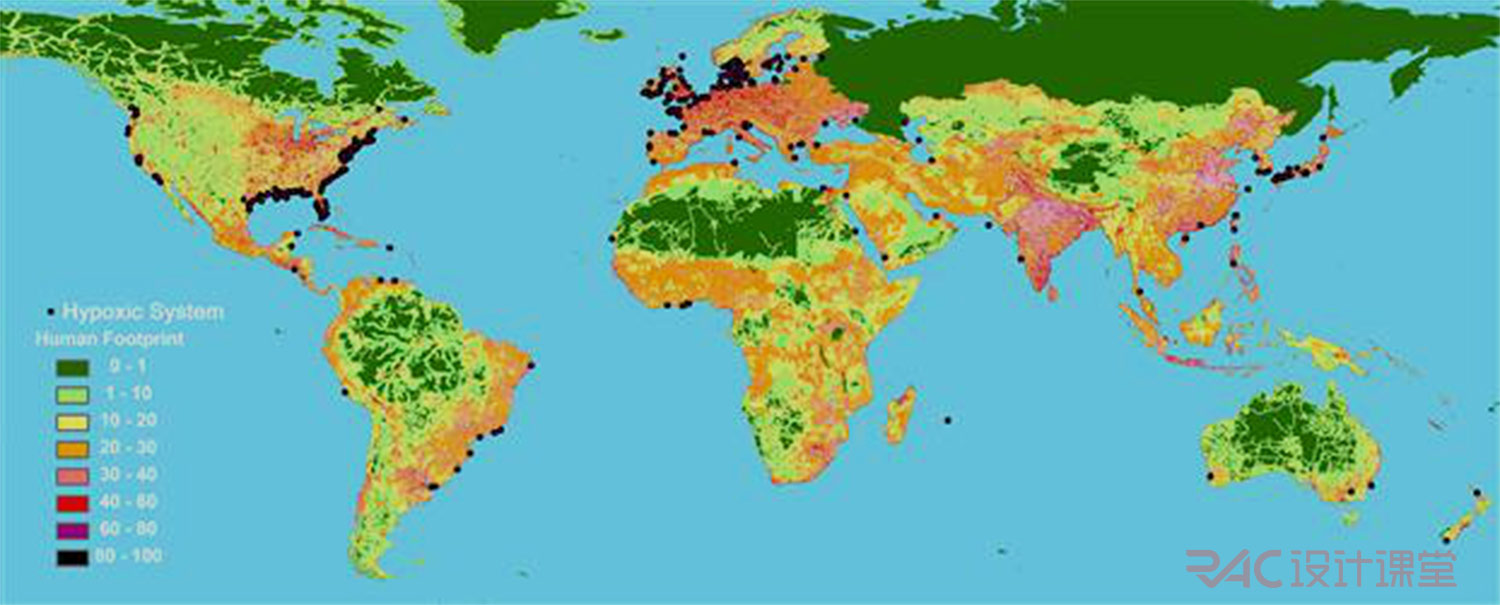
Posted by InfraNet Lab on August 14, 2008
studio类型
生态/大尺度/规划
应对的问题及教学目标
将围绕几个核心技能点 Mapping\ Framework\ Layer\ Program\ Landscape Ecology\ Morphology,来组织逻辑并试图解决场地上的:
1.准确评估气候变化带来的环境危机;
2.理解场地历史和文脉,确定主要的问题(污染、功能、人文关怀与重建);
3. 从区域和场地范围给出不同尺度和空间层面的解答 ;
4.能够从逻辑、形态、功能、使用者及未来预期等方面解答项目所提出的问题。
Studio 方法与媒介
1. Diagnosis
2. Concept & storyline development
3. Design elaboration
4. Design resolution
By using different techniques to understand the (spatial) problematique and have incredible insight into the solution of the area. The experimental techniques (montage, transformation, decomposition) and design methods (scenario pattern,, analogy, flow, layers, scales) refine the ‘diagnose’ and design elaboration throughout the design process.
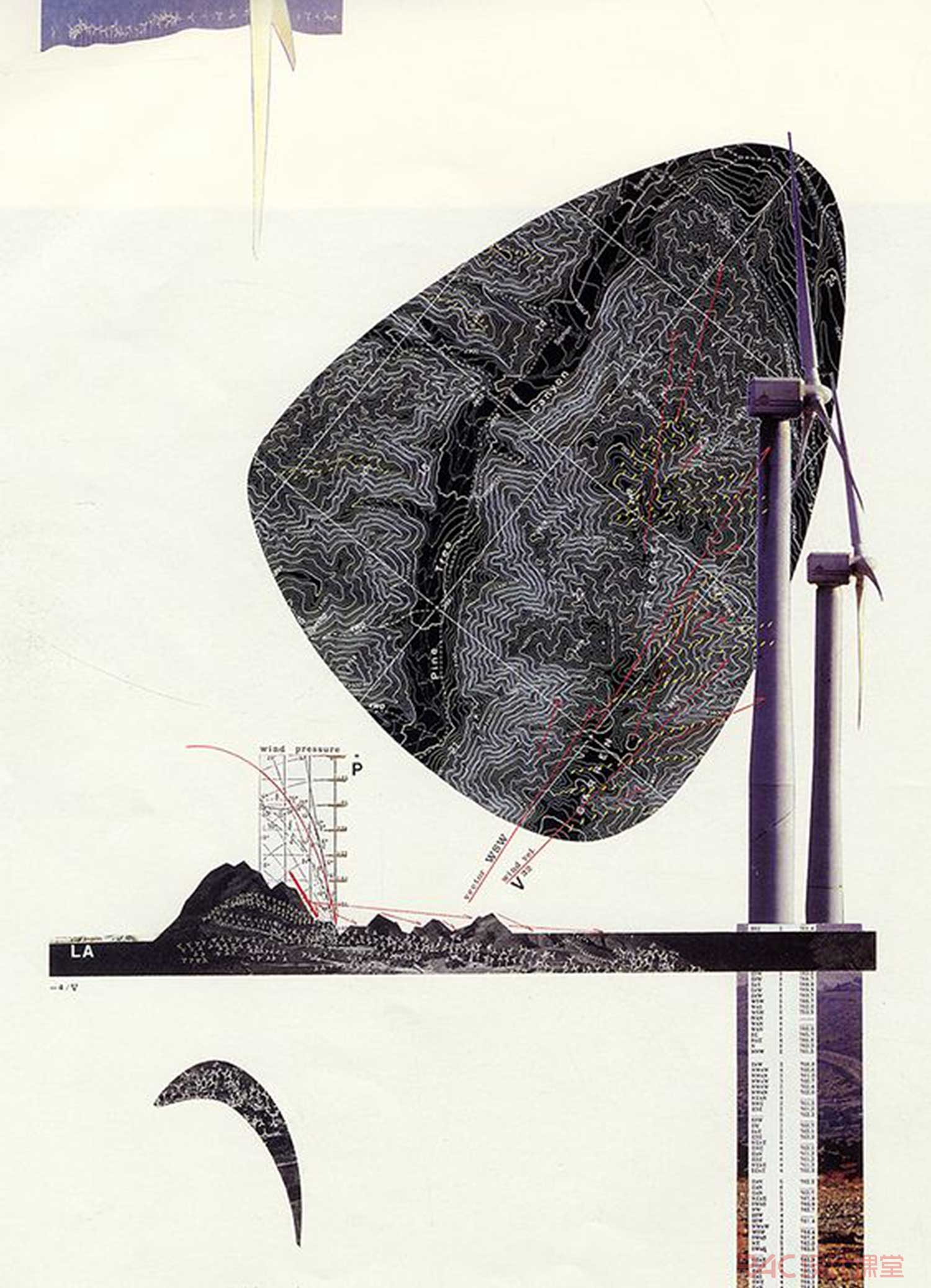
Taking Measures Across the American Landscape,James Corner
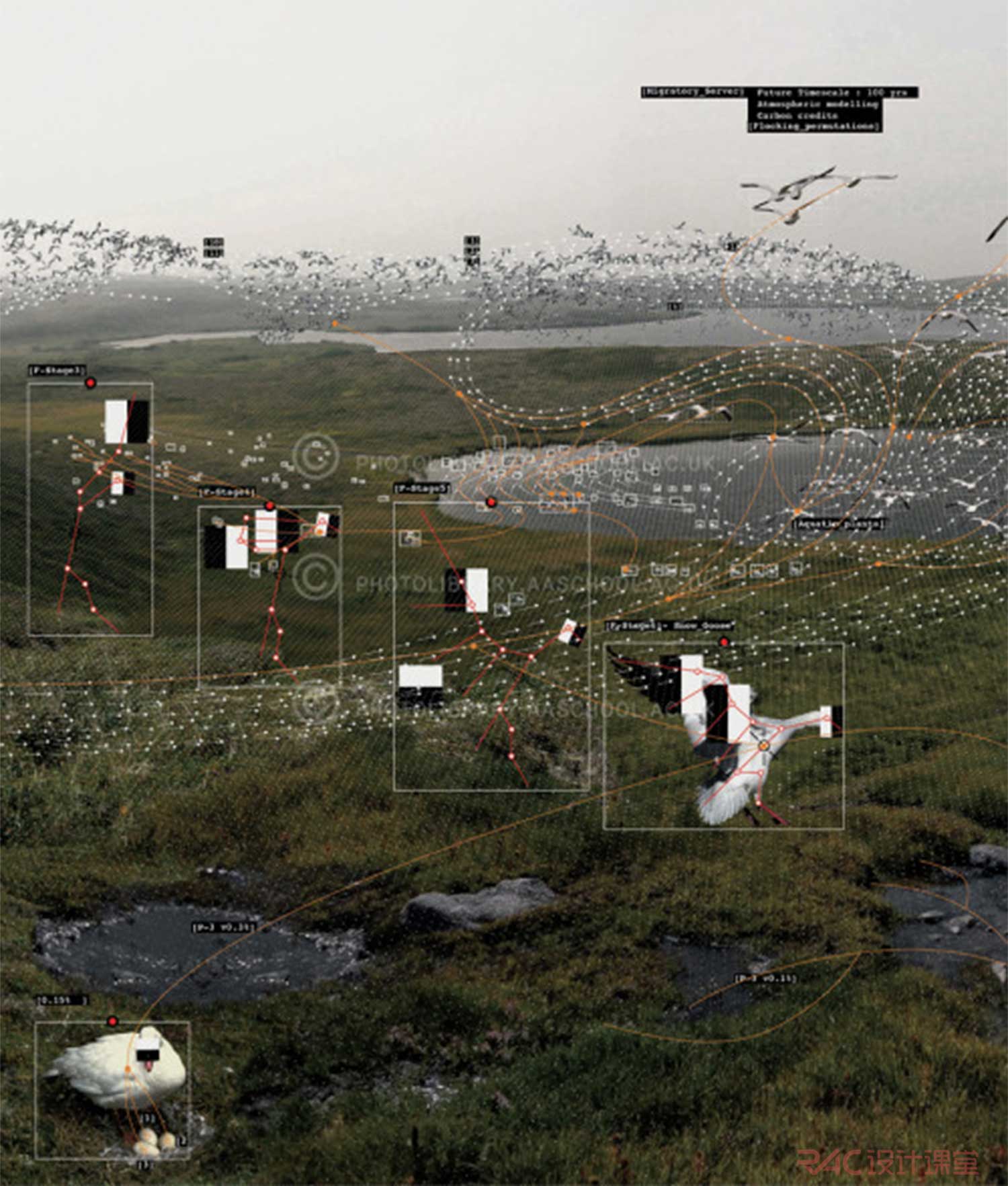
(via activator-inhibitor)
studio课题方向
方向1:
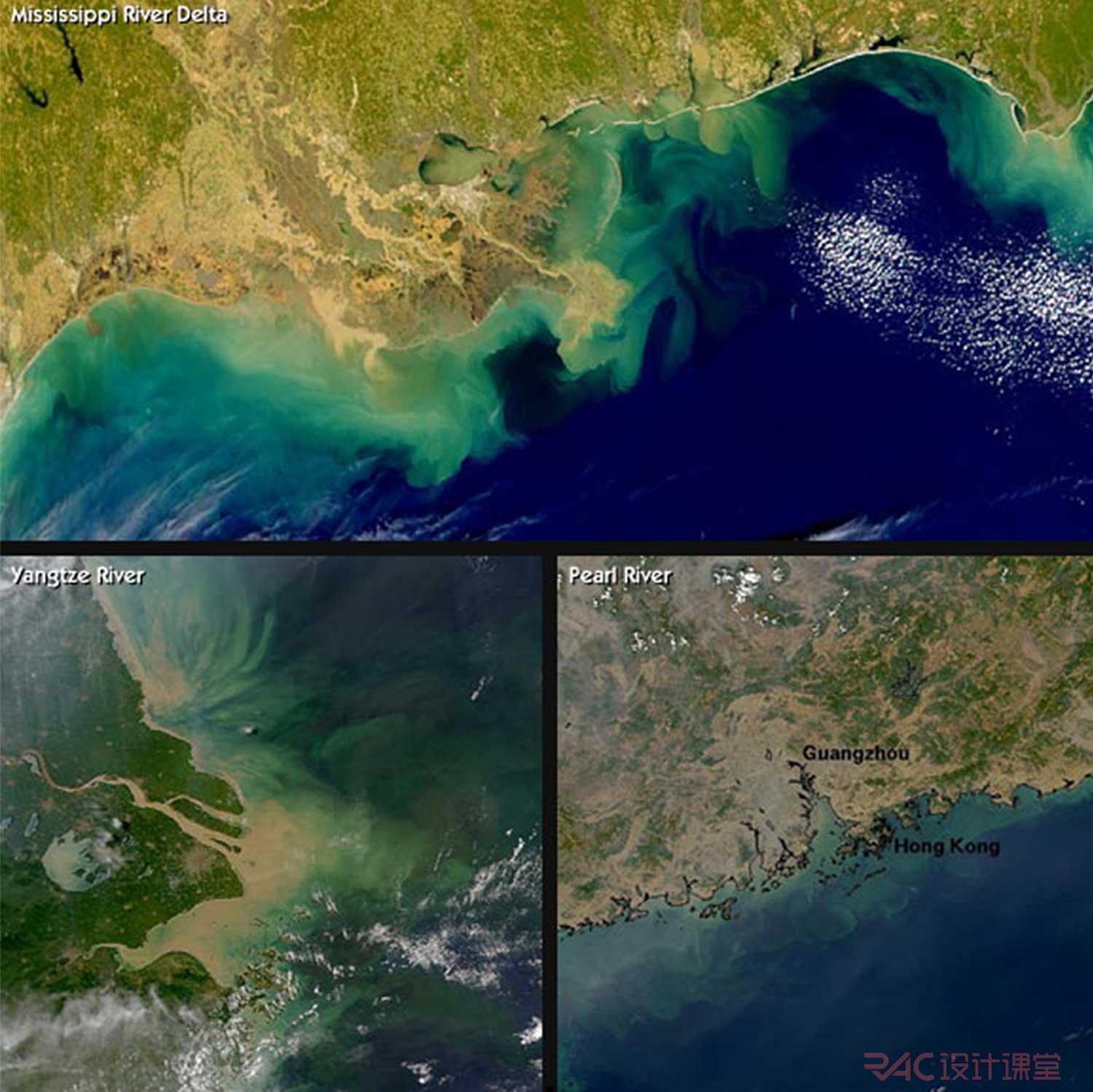
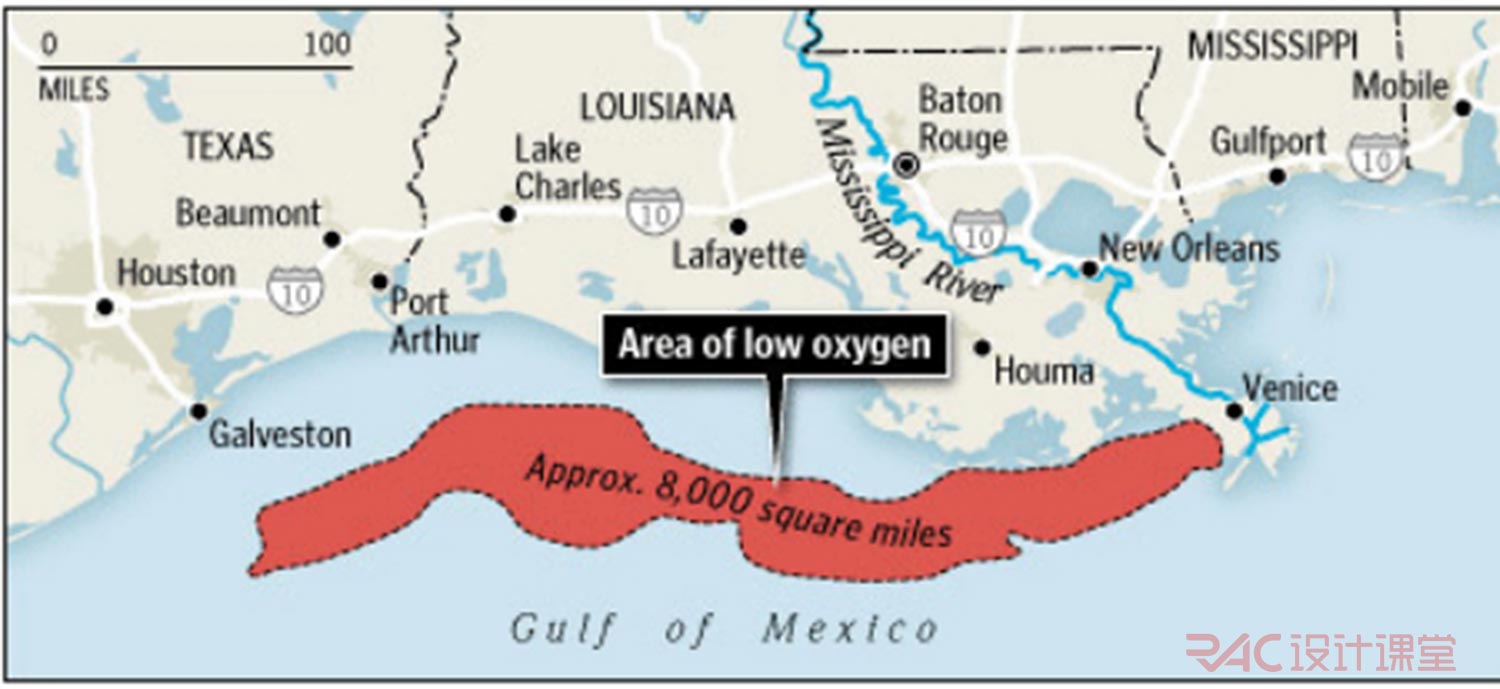
无氧海水死区(deadzone)导致的藻类泛滥地区
随着全球化市场对航运业的压力越来越大,压载水成为一个大问题。这些水通常被污染(残留有货物),并且经常含有外来物种,这些外来物种被倾倒在远离其来源的港口中。这些外来物种经常改变和消除局部生态系统的一部分。
方向2:
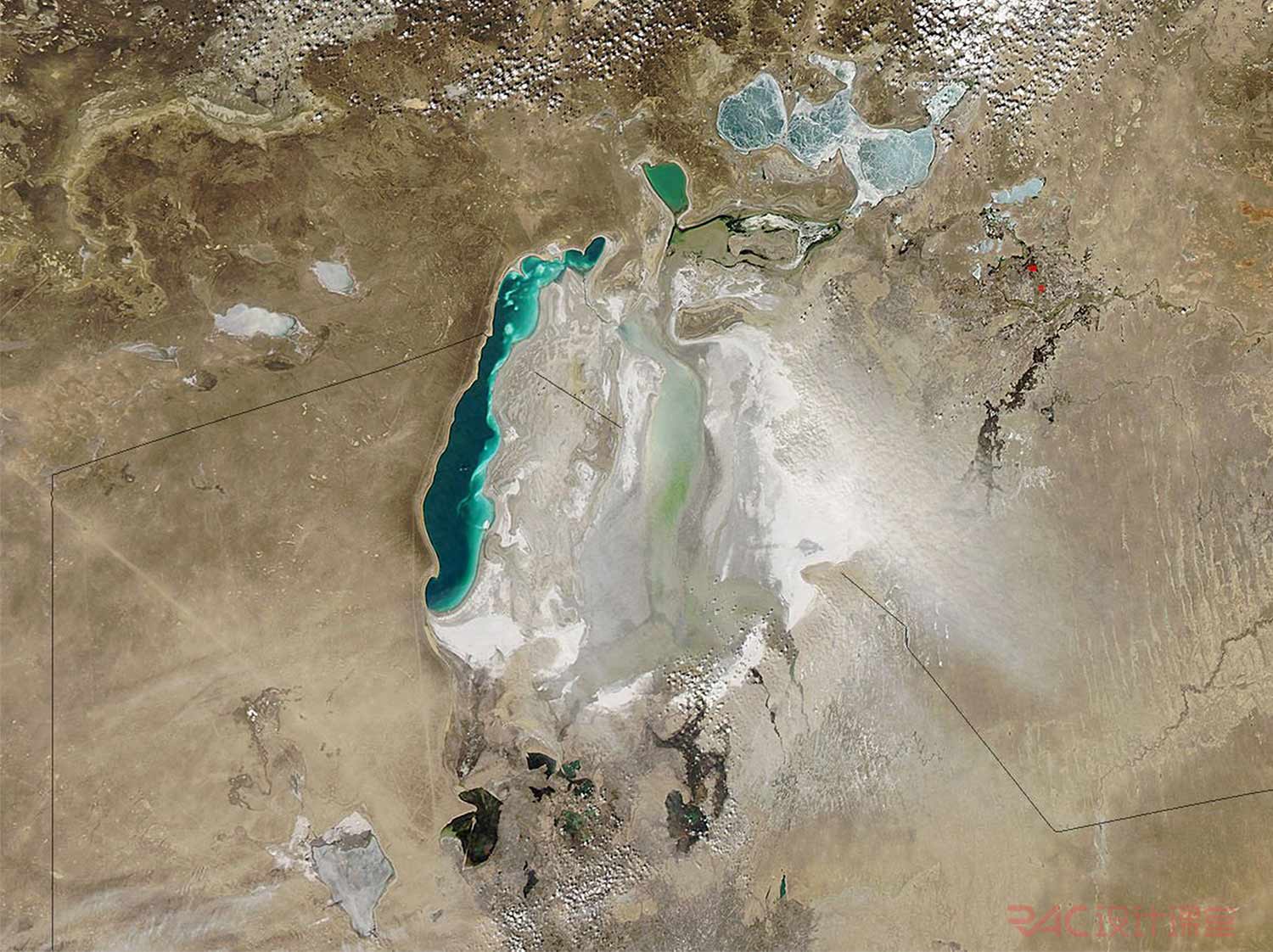
Dust storm on the dry bed of the Aral Sea, along the Kazakhstan-Uzbekistan border, 2010. [NASA]
咸海的大面积消亡导致大区域的生态破坏和物种死亡
方向3:
Iceberg B31, separated from Antarctica’s Pine Island Glacier, heads toward the Amundsen Sea, 2014. [NASA]
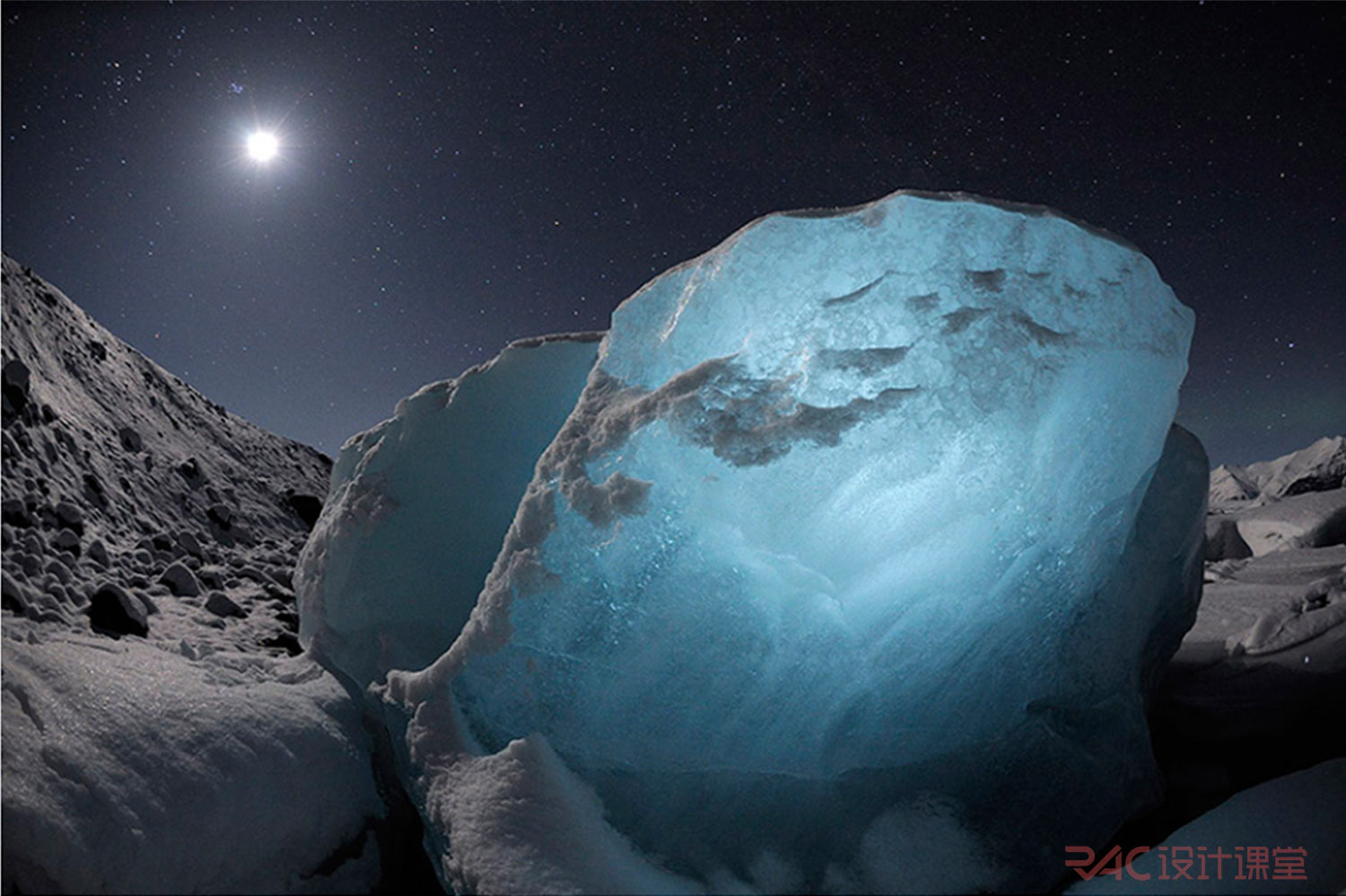
Jökulsárlón Iceland, 2 March 2009. Ice diamond, from ICE: Portraits of Vanishing Glaciers.
北极冰川融化带来的生态危机与物种栖息地的消失
参考书目:
1. Wenche Dramstad,James D. Olson,Richard T.T. Forman
2. Corner J, Corner J M, MacLean A S. Taking measures across the American landscape[M]. Yale University Press, 2000.
3. Ecological urbanism[M]. Lars Müller Publishers, 2016.
4. Land Mosaics,Ian L. McHarg
5. 《生命的系统:景观设计材料与技术创新》,(以色列)里埃特.马格丽丝,(美)亚历山大.罗宾逊
6. Orff K. Toward an urban ecology[J]. 2016.
studio成果:
Design aspects
- Analysis (aspects chosen from groupwork and further developed)
- Spatial concept for the park (plan dwg,model, diagrams, original images)
- Context plan
- Site plan
- The plan figure in relation to existing topography and context
- Image form of the park (image types and form)
- Programme differentiation
- Critical Sections
- Important details and construction schemes
- Surfaces, planting, furnishings, lighting
- collage, renderings, bird view drawings
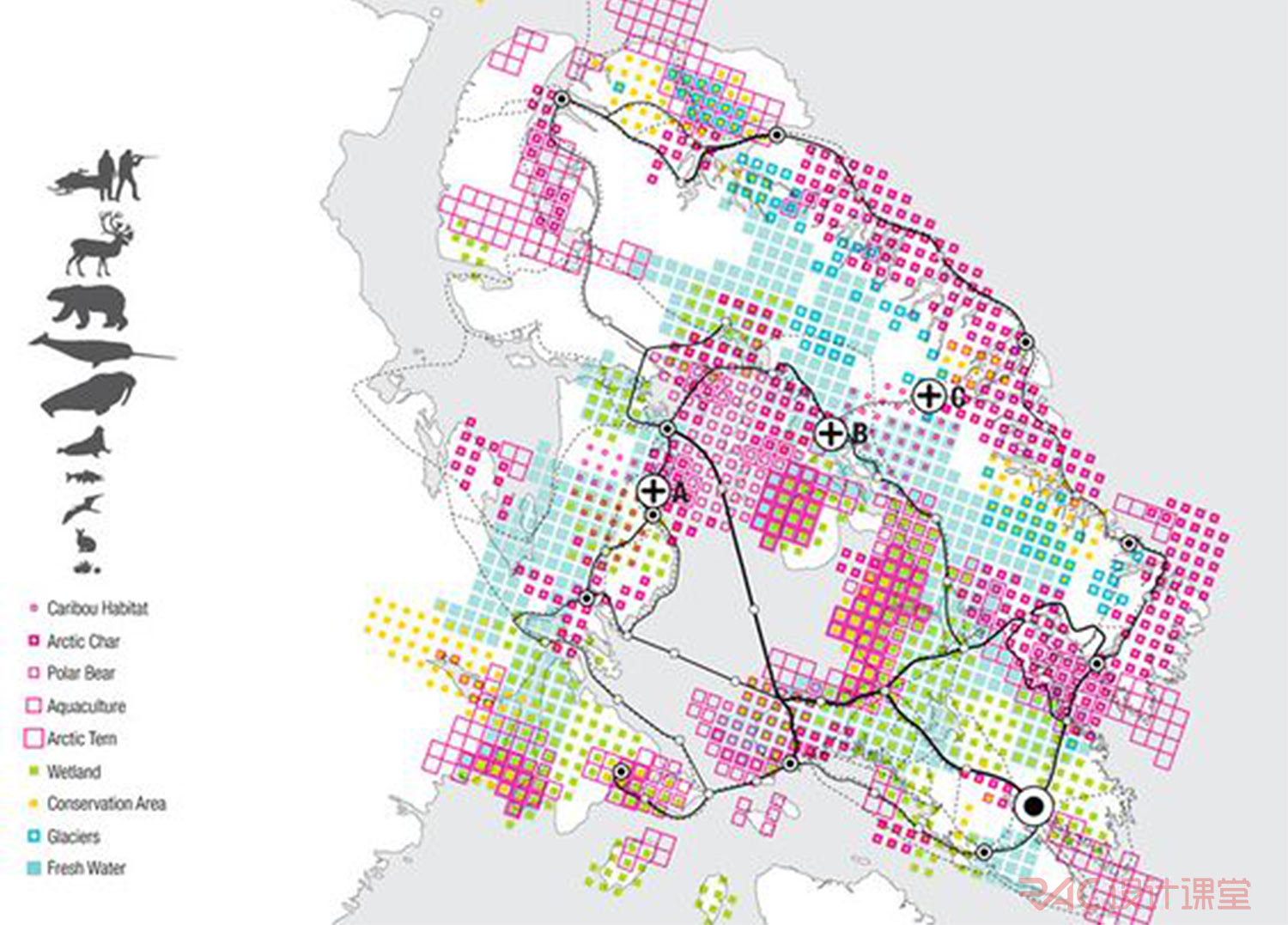
Arctic Food Network / Lateral Office
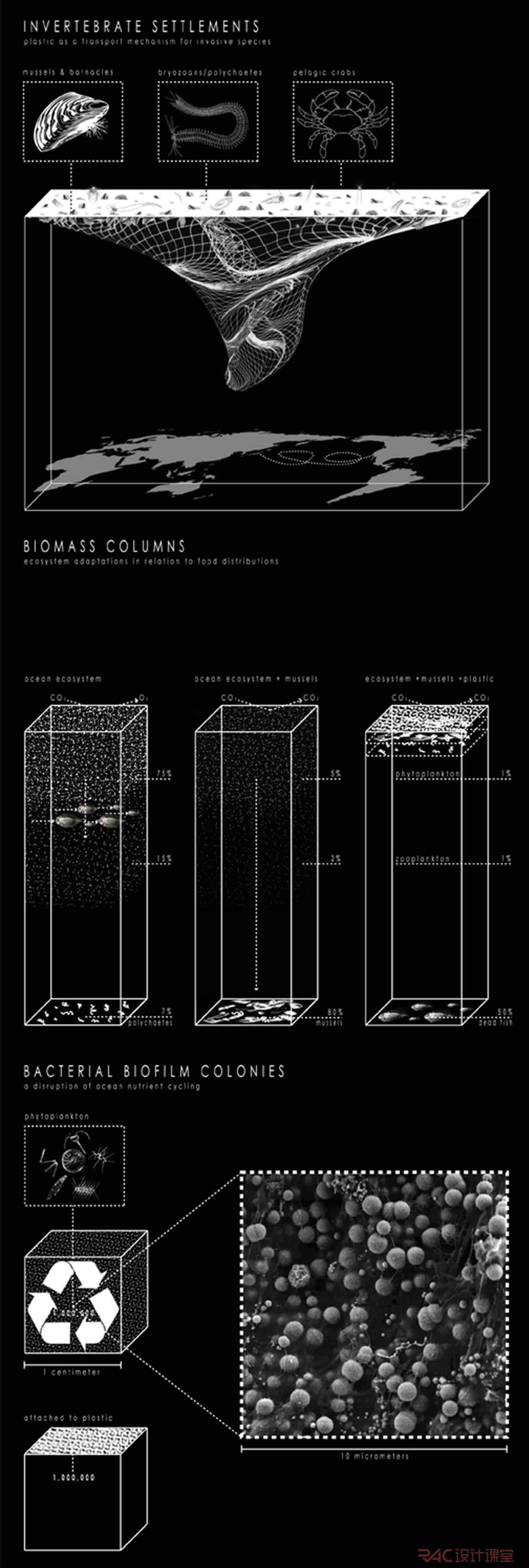
[Top: The floating, tangled settlements of trash facilitate the spread of invasive species (like mussels, barnacles, invertebrates, and pelagic crabs) across the ocean. Middle: Invasive species often attach to floating plastic settlements, affecting the oceans oxygen, phytoplankton, and zooplankton production, to the detriment of native ecosystems. Bottom: The average cubic centimeter of ocean water holds about one million phytoplankton-producing-bacteria; however, if this bacteria attaches to plastic, it creates biofilm colonies on the surface of the ocean, depriving lower depths of an even distribution ocean nutrient cycling. Images Courtesy of: Igraine Perkinson]
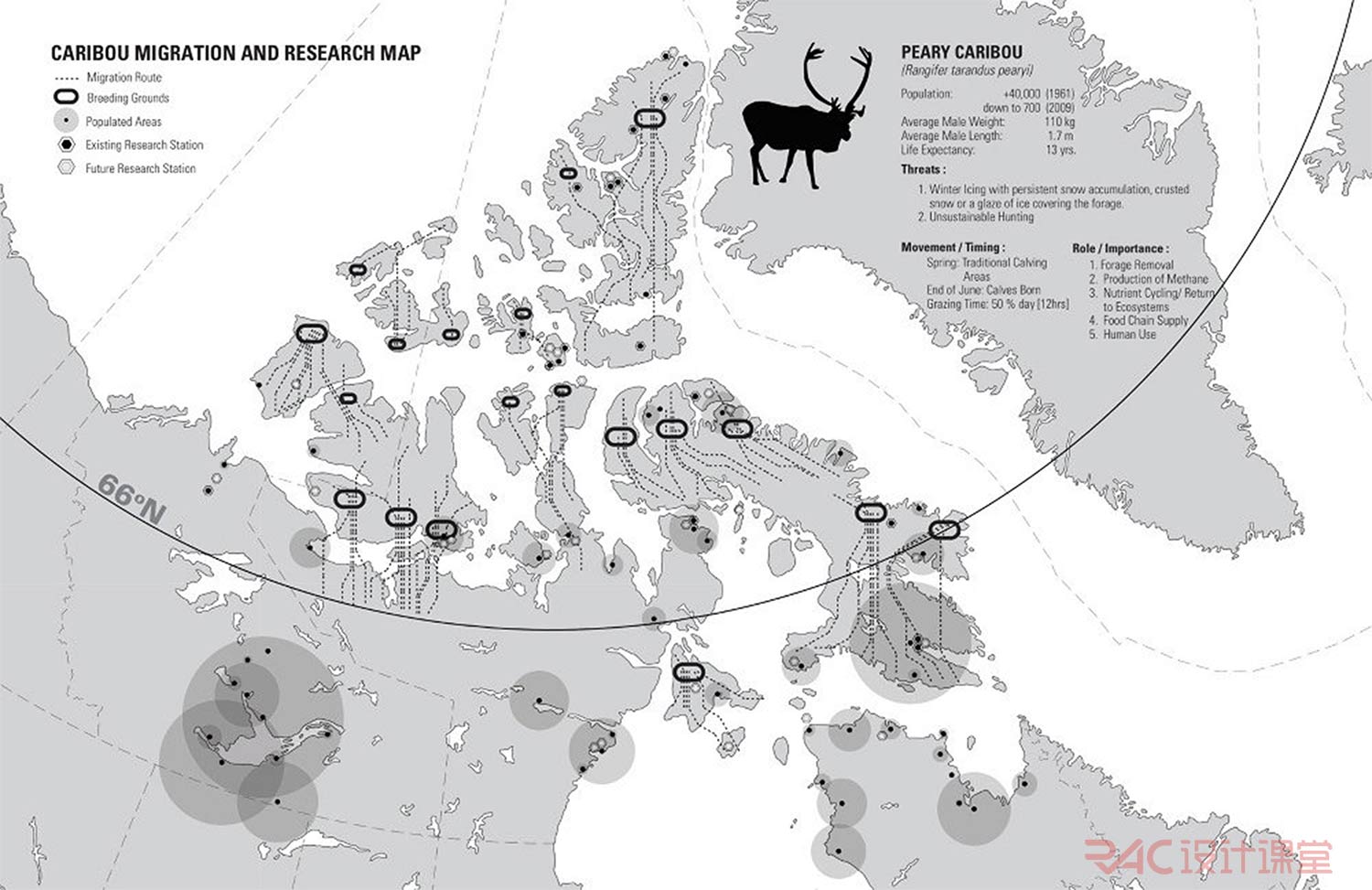
Caribou migration routes and calving grounds, in relation to existing and proposed research stations. [Lateral Office]
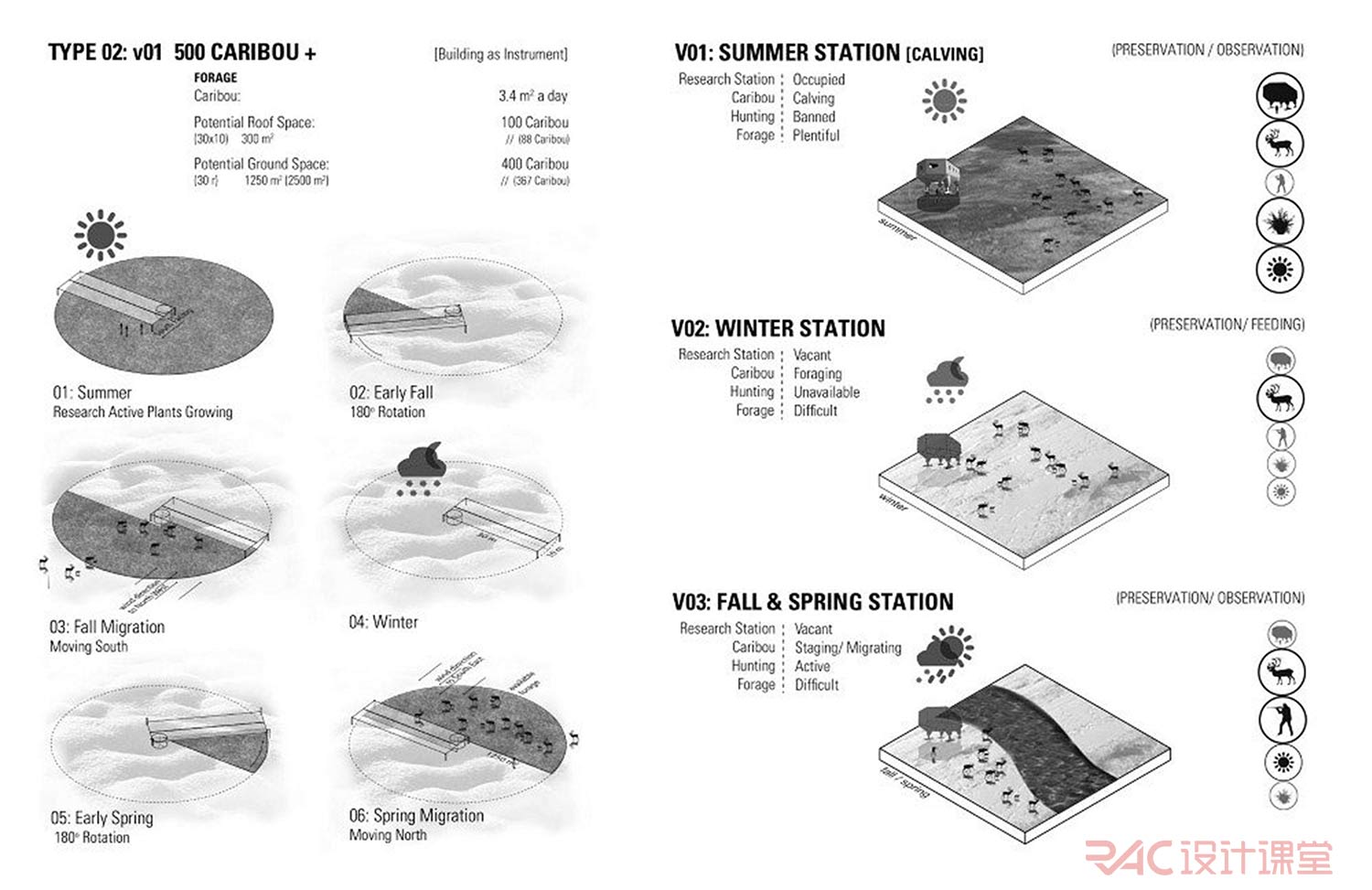
Proposal for a new caribou research station typology; rotating gantries would clear ice and snow so that passing caribou herds could forage on lichen. [Lateral Office]