Design Studio HS2018 | Robotic Landscapes II HS2018机器人景观Studio
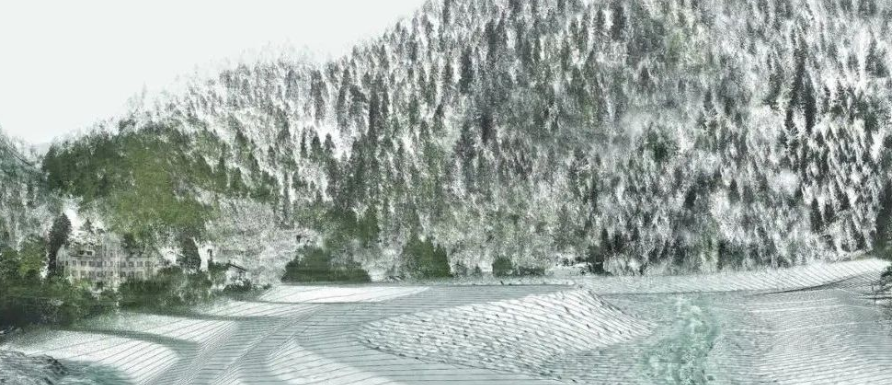
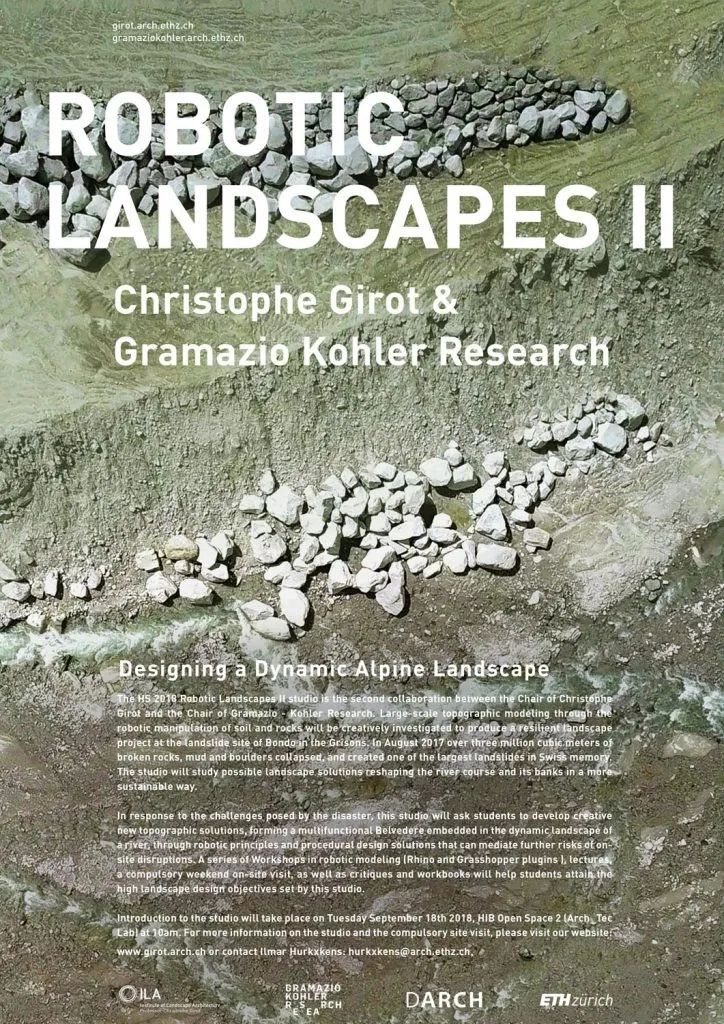
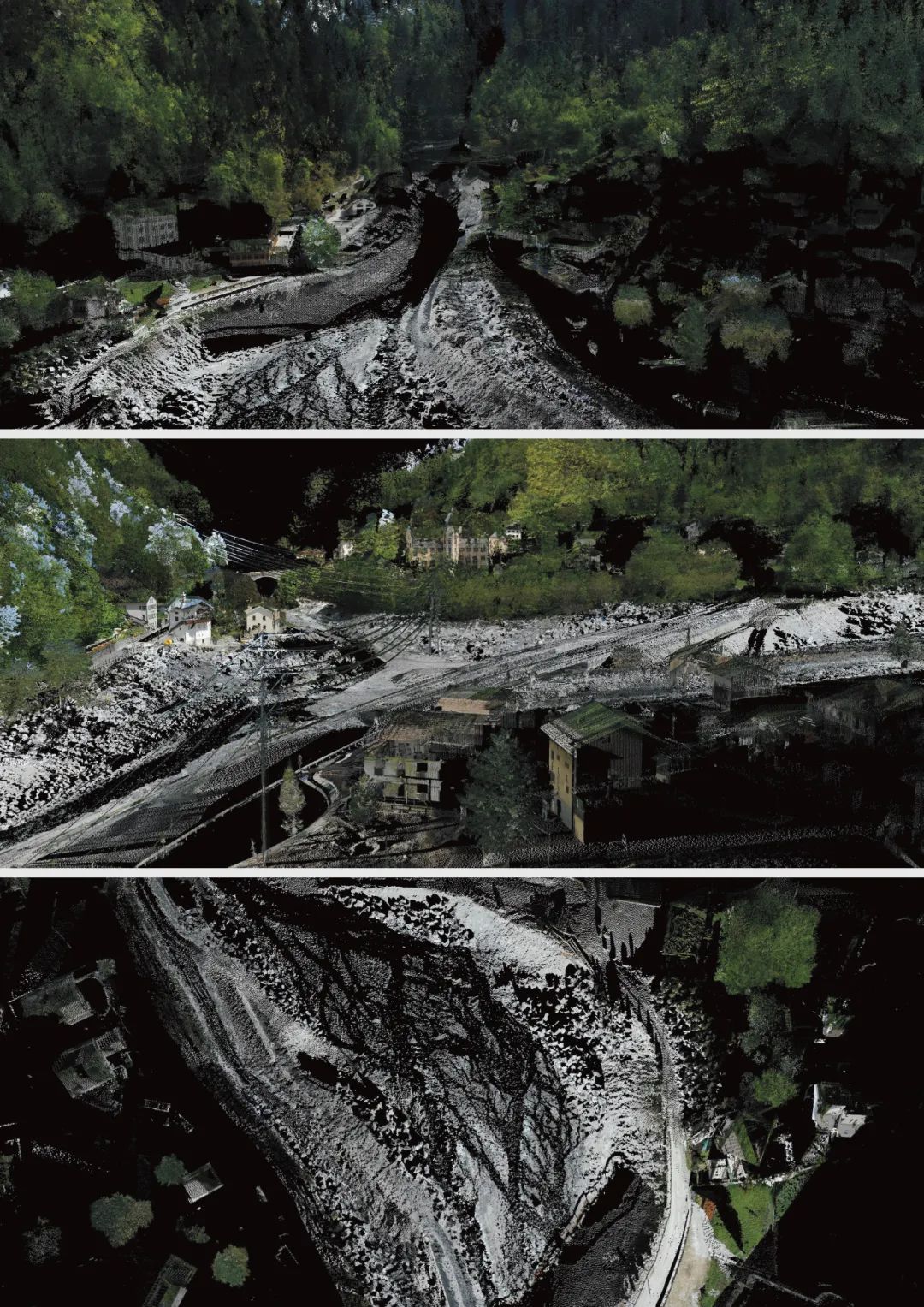
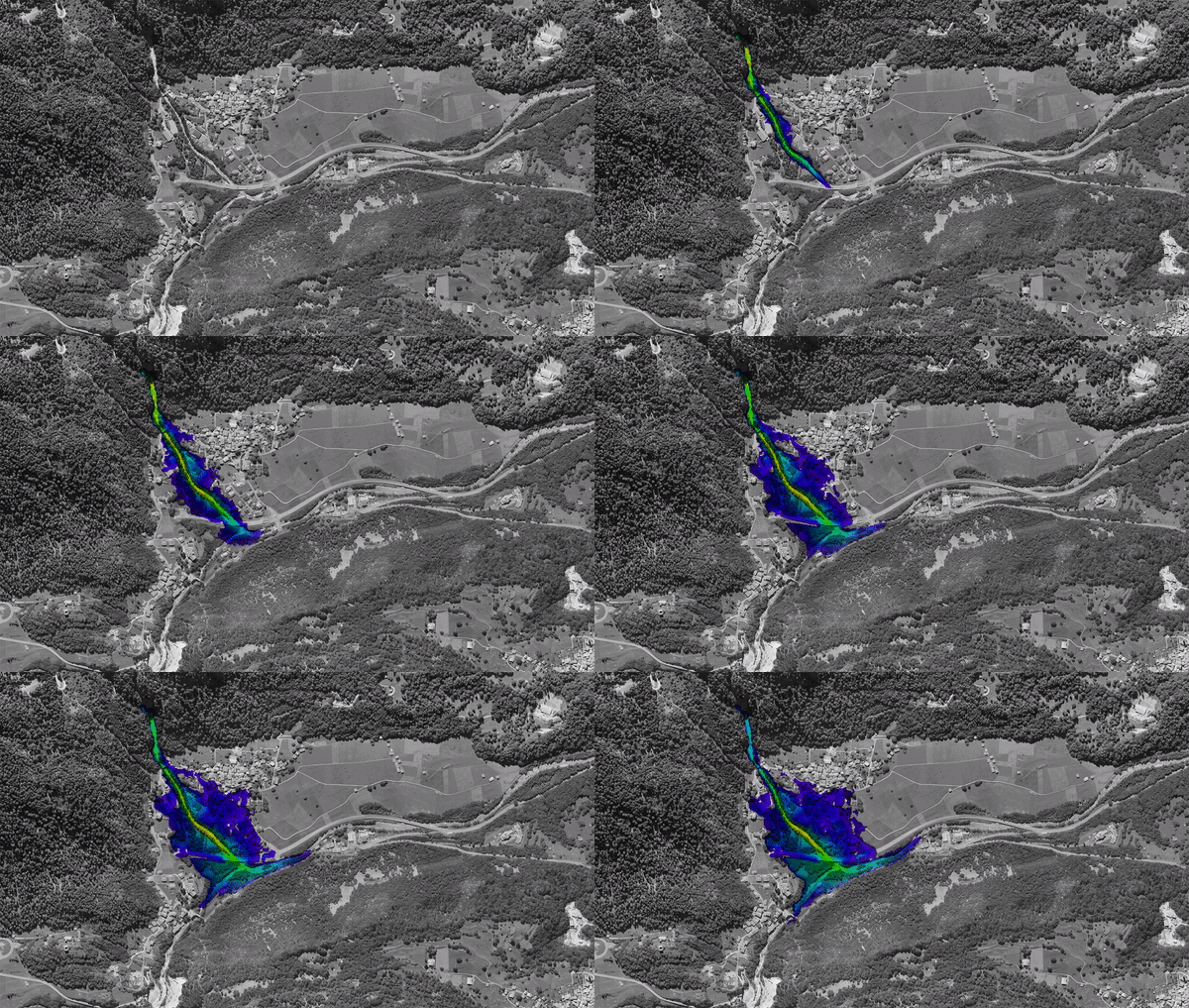
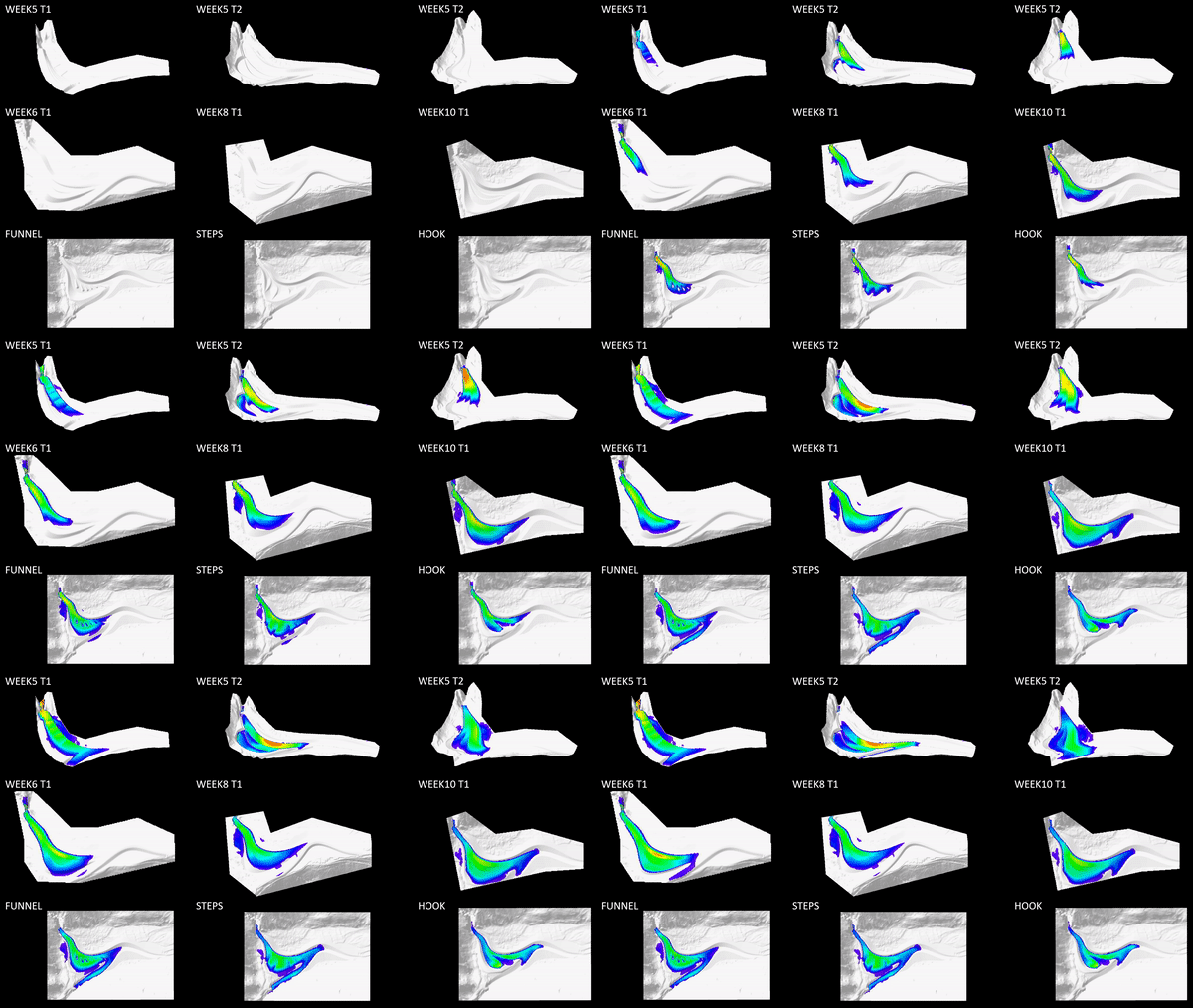
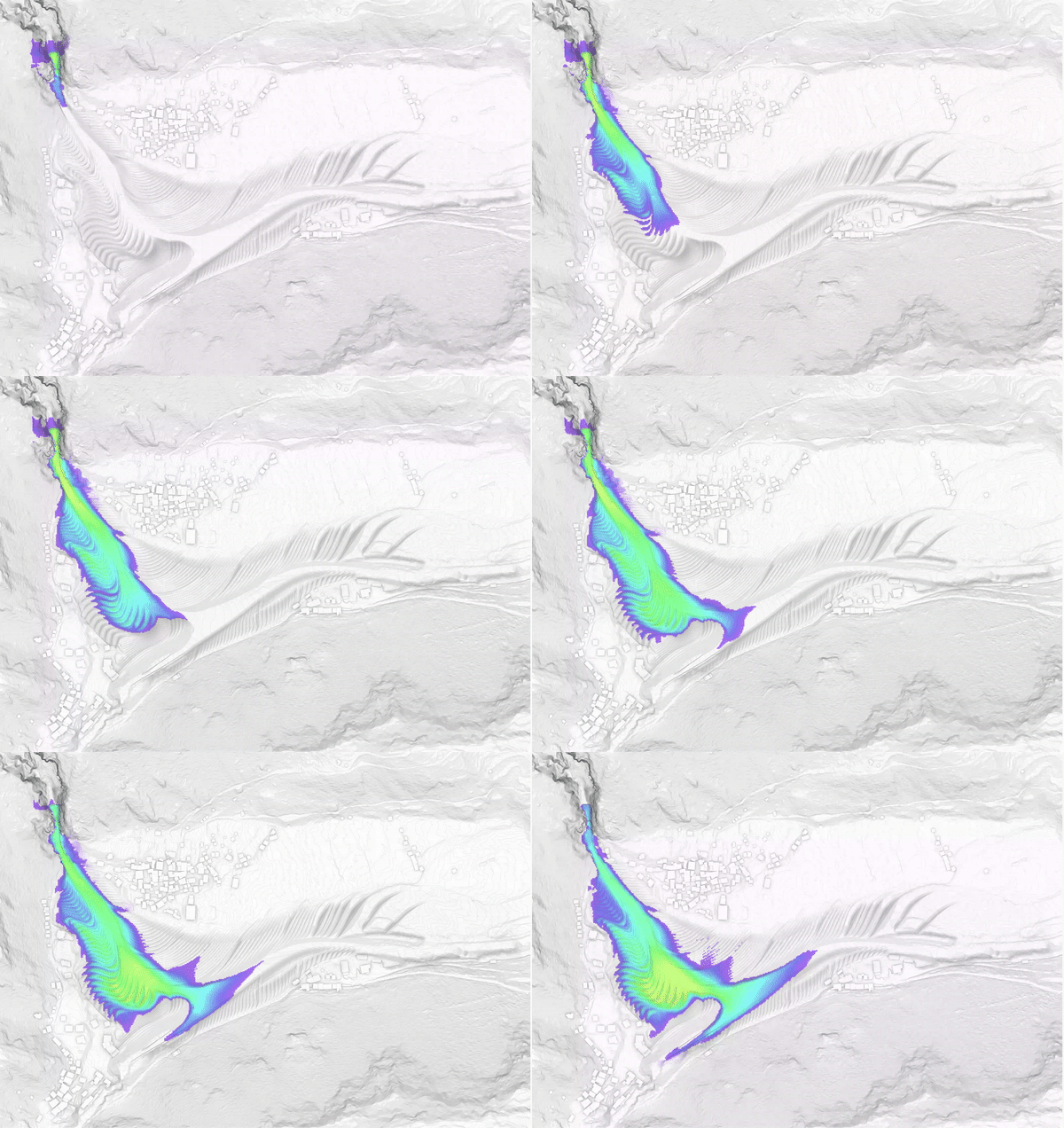
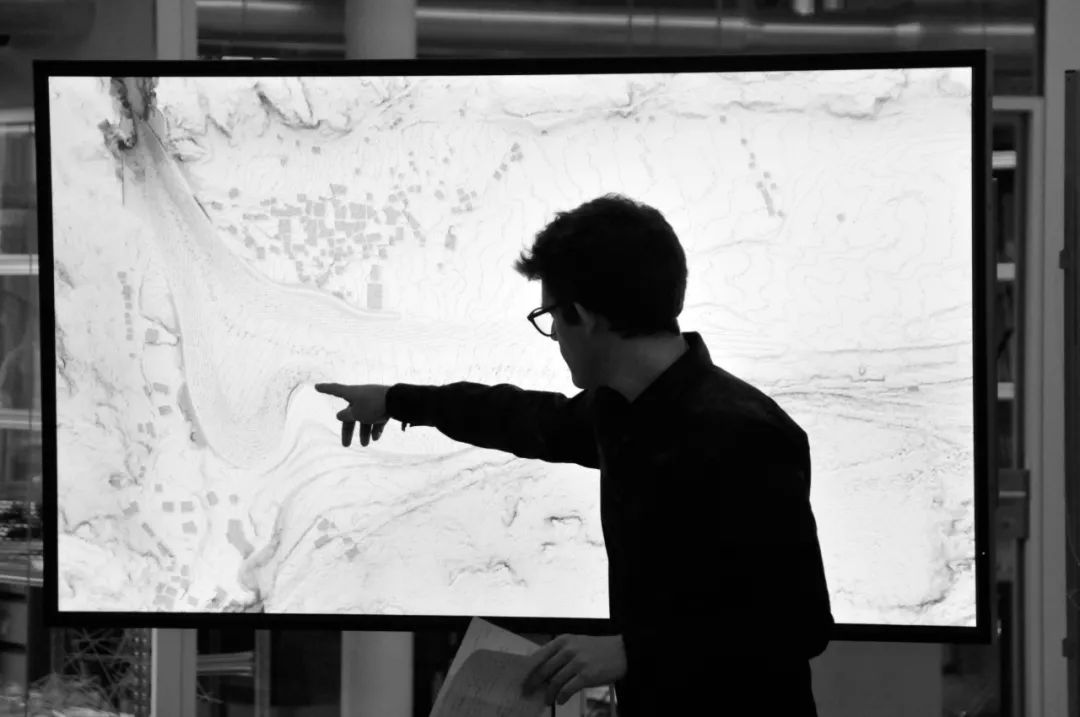
DesignStudio HS2018 | Robotic Landscapes IIHS2018机器人景观Studio 一个充满活力的阿尔卑斯山景观 The HS 2018 Robotic Landscapes II studio isthe second collaboration between the Chair of Christophe Girot and the Chair ofGramazio – Kohler Research. It continues to investigate the potential ofon-site robotic construction and grading methods in landscape architecture.Large-scale topographic modeling through the robotic manipulation of soil androcks will be creatively investigated to produce a resilient landscape projectat the landslide site of Bondo in the Grisons.HS 2018 Robotic Landscape II 工作坊是克里斯托弗·基尔特*(Christophe Girot)主席,格拉玛奇奥(Gramazio)主席和科勒(Kohler)*主席的第二次合作。这次合作继续探索景观建筑中实地机器人施工和整地技术的潜力。通过创造性地研究通过机器人操纵土壤和岩石进行大规模地形建模,以在格劳宾登州邦多(Bondo in the Grisons)的山体滑坡现场建造一个弹性景观项目。Since 2011, a chain of major tectonicevents have deeply affected Val Bondasca since the partial geological collapseof the Piz Cengalo Mountain requiring urgent remedial measures. In August 2017over three million cubic meters of broken rocks, mud and boulders collapsed,and created one of the largest landslides in Swiss memory. A wall of mud androcks crashed down on the village of Bondo obstructing the main road, killingpeople and dividing the village into two now disconnected sites. There stillremains 1.5 million cubic meters of landslide rock in an unstable conditionstill threatening the Bondasca Valley. Heavy rainfall will undoubtedly resultin further landslides worsening the precarious situation in Bondo in the comingyears. The studio will study possible landscape solutions reshaping the rivercourse and its banks in a more sustainable way.自2011年以来,也是自Piz Cengalo山的部分地质坍塌需要采取紧急补救措施以来,一系列重大的构造事件对邦达斯卡山谷(Val Bondasca)产生了深刻的影响。2017年8月,超过300万立方米的碎石、泥浆和巨石坍塌,造成瑞士有史以来最大的山体滑坡事件之一。一堵泥石墙倒塌在邦多村,阻塞了主要道路,造成了人员伤亡,并将该村分成了两个不相连的地方。目前仍有150万立方米的滑坡岩石处于不稳定状态,仍然威胁着邦达斯卡山谷。暴雨无疑将导致进一步的山体滑坡,使邦多的不稳定状况在未来几年内进一步恶化。本次Studio将研究可能的景观解决方案,以一种更可持续的方式重塑河道和河岸。邦多点云数据图2018 来自ChristophGirot In response to the challenges posed by thedisaster, this studio will ask students to develop creative new topographicsolutions using unformed sand, gravel and rock from the landslide throughrobotic principles and procedural design solutions that can mediate furtherrisks of on-site disruptions.为了应对灾难带来的挑战,Studio将要求学生通过机器人原理和程序设计方案,利用山体滑坡中未成型的沙子、砾石和岩石,开发创造性的新地形解决方案,从而调节场地中破坏的进一步风险。
This will be a unique opportunity tore-imagine the making of a landscape project in an alpine setting looking atits potential for reconciliation between natural processes and designedenvironments. Students will be asked to propose a multifunctional Belvedereembedded in the dynamic landscape of a river, reinventing new forms nature andtopographies for Bondo, by applying material from the landslide appropriatelyto help reconnect both sides of the village that were abruptly separated by thecataclysm.
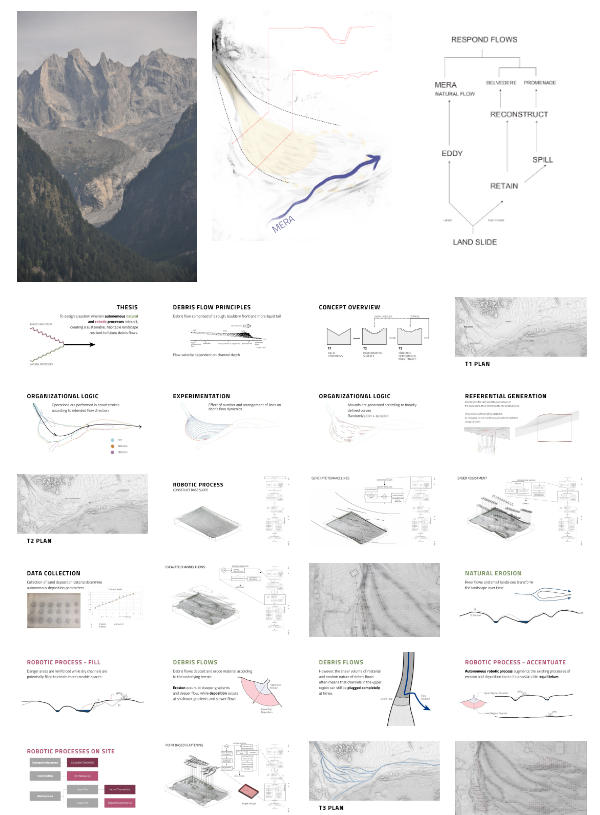
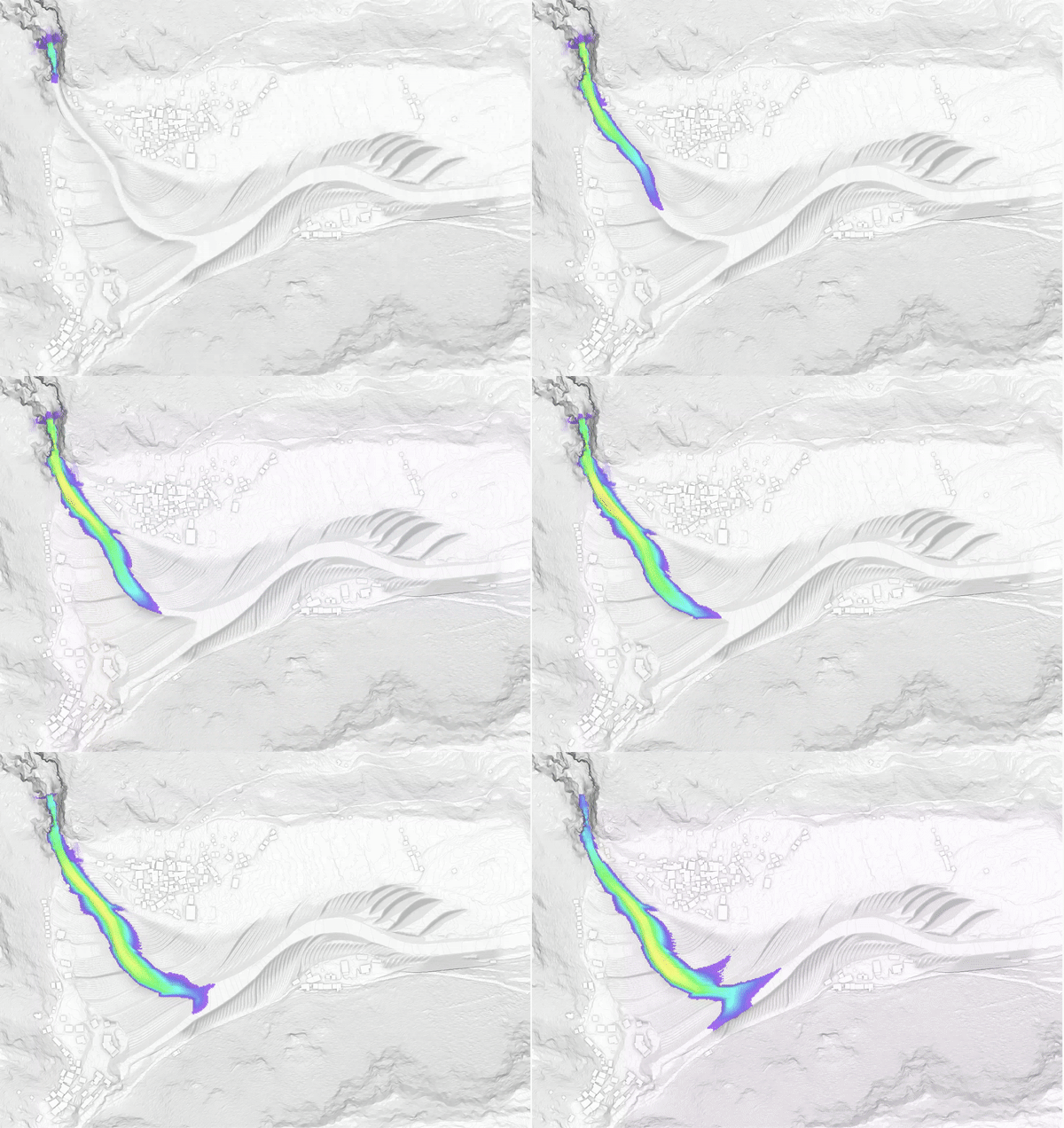
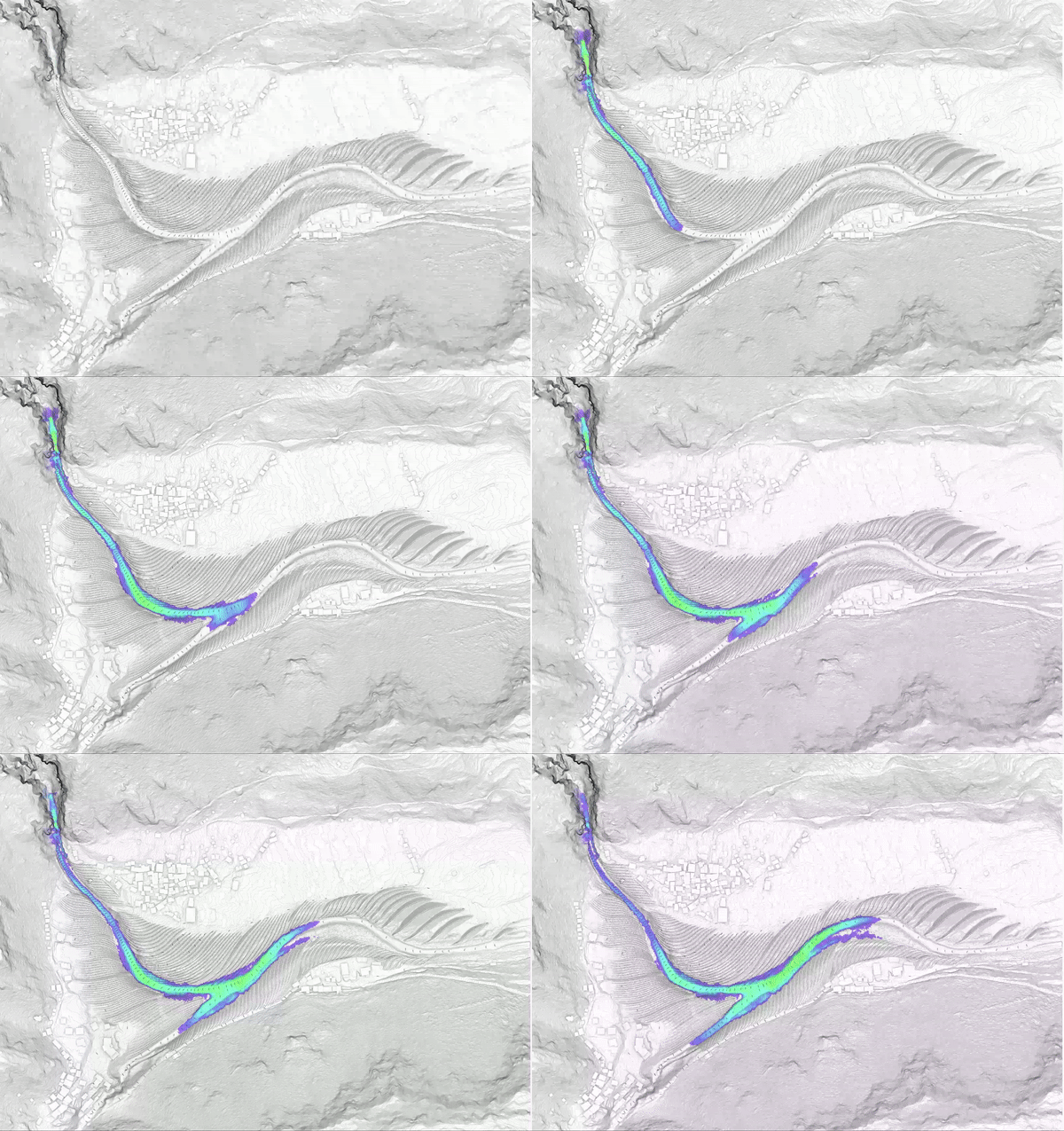
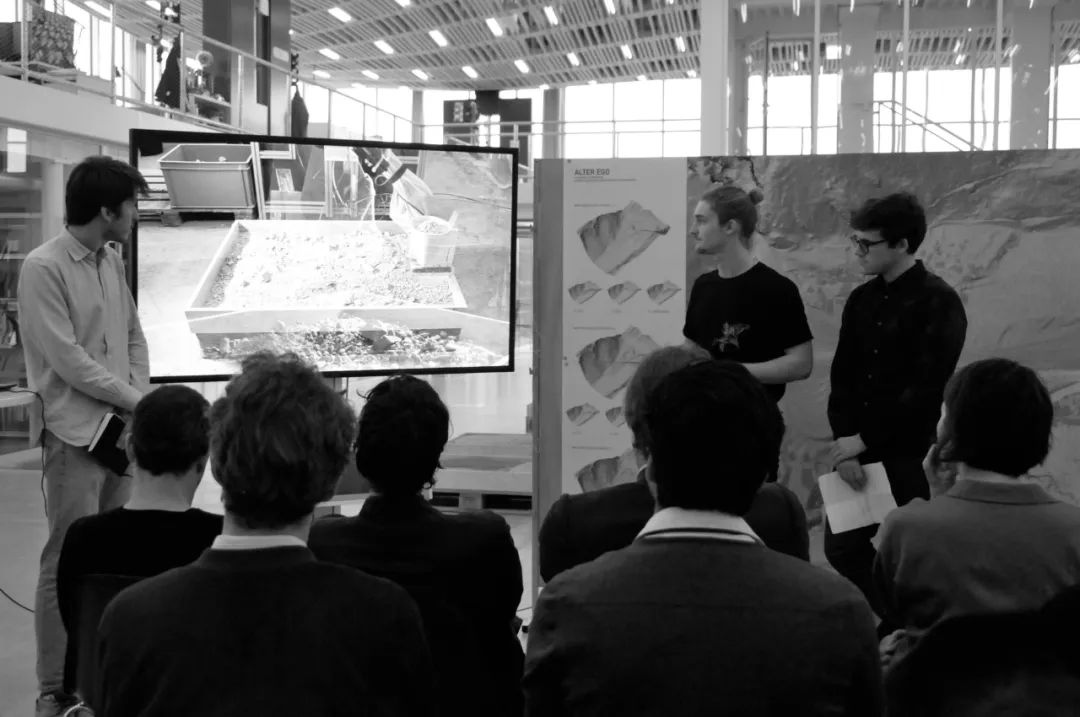
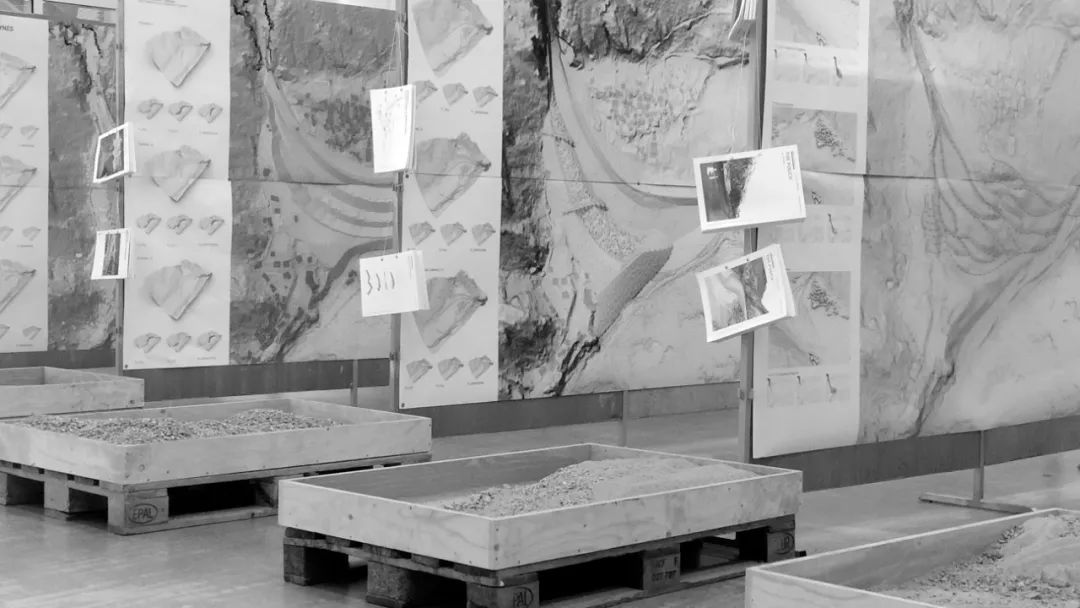
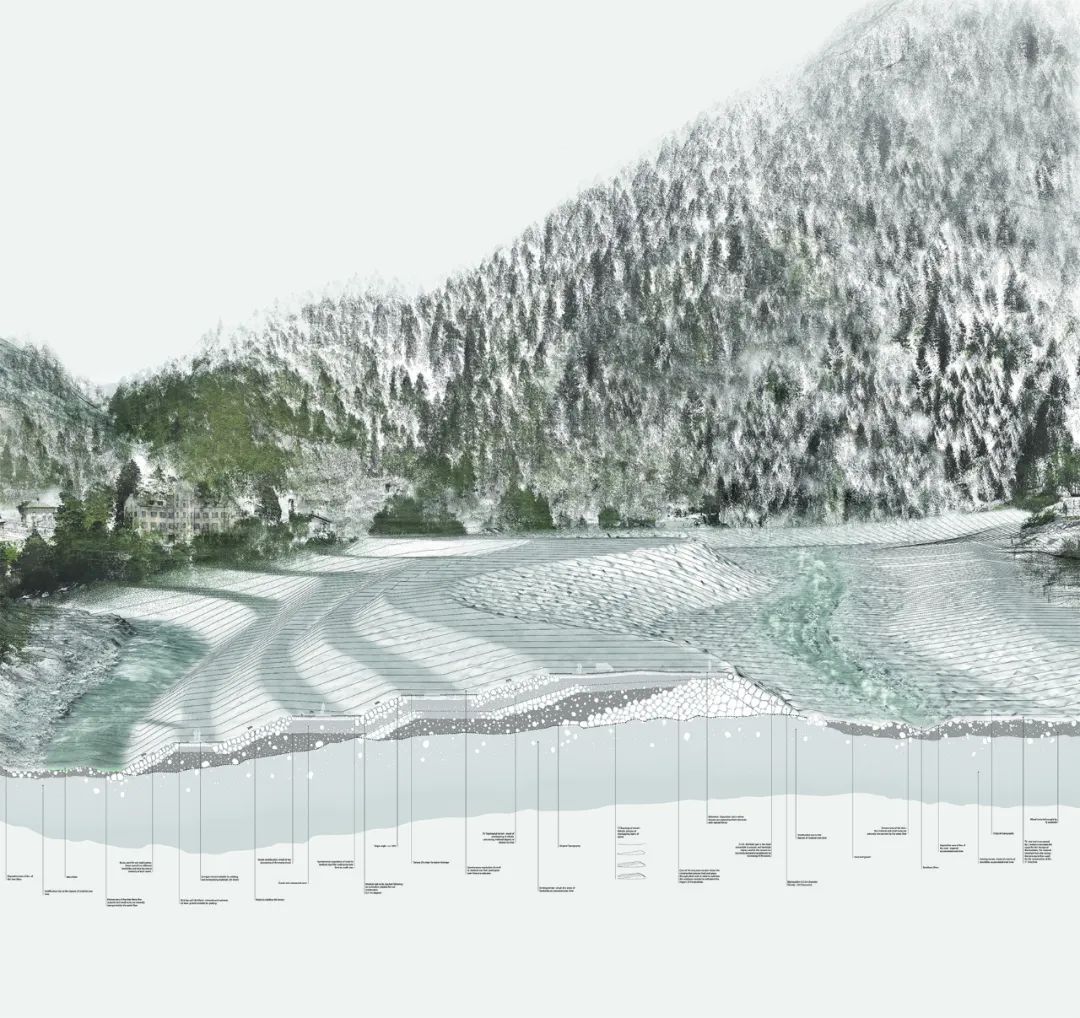
Based on dynamic landscape modelingprinciples, the studio will use the facilities of the ETH Landscape Modelingand Visualizing Lab (LVML) and the ITA Arch-Tec-Lab to establish a proceduraland iterative design approach. There will be workshops in robotic modelingusing sand and gravel, 3D landscape modeling, and 3D prototype printing to helpconceive 3D landscape models (using Rhino and Grasshopper plugins). A series oflectures, a compulsory weekend on-site visit, as well as critiques andworkbooks will help students attain the high landscape design objectives set bythis studio.基于动态景观建模原则,该工作室将使用ETH Landscape Modeling and Visualizing Lab (LVML) 和 ITAArch-Tec-Lab的设施来建立程序化和迭代设计方法。Studio将举办使用沙子和砾石进行机器人建模、3D 景观建模和 3D 原型打印的研讨会,以帮助构思 3D 景观模型(使用 Rhino 和 Grasshopper 插件)。一系列讲座、周末必修课以及评论和作业将帮助学生实现Studio设定的高标准景观设计目标。 系统调查During the Design Studio every groupstudied the three strategic design phases (2015 – 2019 – future) in order torespond to the many debris flows arriving in Bondo. Starting from the originalvalley state in 2015 (T1), the topography in Bondohas been prepared to allow for the 400’000 m3of material arriving in summer 2017. After this first landslide, clean-upactivities of the riverbed and the construction of a promenade and belvederewas designed (T2). At the same time, strategic topographic structure allowedfor future landslide events to happen without any destruction to houses,bridges and roads. This means that further clean-up and terrain modeling workshas been planned for this last phase as well (T3). The robotic modeling in thefirst weeks has informed the smaller scale and the robotic construction methodwith experiments on the UR10 Robotic Arm. This conceptual work was translatedto a thesis on robotic construction for the new landscape topology on the site.在设计工作室期间,每个小组都研究了三个策略设计阶段(2015年 – 2019年 – 未来),以应对抵达邦多的许多碎石流。从2015年(T1)的原始山谷状态开始,邦多的地形已经准备好在2017年的夏季抵达40万立方米的材料。在第一次山体滑坡后,河床的清理活动和建设设计了长廊和观景台(T2)。同时,策略性的地形结构允许未来再次发生山体滑坡,而不会对房屋、桥梁和道路造成任何的破坏。这意味着在最后阶段(T3)也计划进行进一步的清理和地形建模工作。最初几周的机器人建模通过在UR10机械臂上的实验,为较小尺度的场地和机器人构造方法提供了信息。这项概念性的工作被转化为一篇关于研究场地上对新景观地形拓扑地形进行机器人施工的论文。In our final project, we have implemented the garage, the menzimuck, and the site management plan as a key manner of understanding ourproject. Many reiterations of the design and cycles of research have been done,and we believe that the project is a clear visualisation of the harmony thatcan be created between natural and robotic processes. The movements of therobots, perpetually changing and perpetually enacted upon the landscape like anelectronic SIsyphus, is frozen in our plan for T3. Ultimately, the project isabout a process, understanding nature‘s programming code and attempting to„hack“ it through the code of our own. This code, injected through the MenziMucks, aim to shape the debris flow in our favour and to maintain the systemagainst the entropy it creates.”“在最终项目中,我们通过了车库、步行式挖掘机(Menzi muck),以及场地管理计划作为了解我们项目的关键方式。通过完成多次设计和研究周期的重复,我们相信该项目是自然和机器人过程之间可以创造的和谐关系的一个清晰的可视化。机器人的动作,就像电子西西弗斯一样吗,不断变化并在景观中不断上演,在我们的T3计划中被冻结。最终,该项目是一个了解自然的编程代码,并试图通过我们自己的代码来破解‘它’的过程。这段代码通过步行式挖掘机的介入,旨在制造对我们有利的碎石流,并且维护这个系统以对抗它产生的熵。” 设计中的方法论Based on dynamic landscape modelingprinciples, the studio will use the facilities of the ETH Landscape Modelingand Visualizing Lab (LVML) and the ITA Arch-Tec-Lab to establish a proceduraland iterative design approach. There will be workshops in robotic modelingusing sand and gravel, 3D landscape modeling, and 3D prototype printing to helpconceive 3D landscape models (using Rhino and Grasshopper plugins). A series oflectures, a compulsory weekend on-site visit, as well as critiques andworkbooks will help students attain the high landscape design objectives set bythis studio.基于动态景观建模原则,该工作室将使用 ETH Landscape Modeling and Visualizing Lab(LVML) 和 ITA Arch-Tec-Lab 的设施来建立程序化和迭代设计方法,并且将举办使用沙子和砾石进行机器人建模、3D 景观建模和 3D 原型打印的研讨会,以帮助构思 3D 景观模型(使用 Rhino 和Grasshopper 插件)。一系列讲座、周末必修课以及评论和作业将帮助学生实现该Studio设定的高标准景观设计目标This course explores procedural design androbotic modeling processes and their potential for future landscape design. Theprocessing of shapeless materials such as sand and gravel through digitallycontrolled machines equipped with sensors allowes the students to implementfeedback-driven formation processes into their landscape designs. The additionof larger rocks and boulders enables them to create various surface conditionsthat can respond and withstand the large forces of water and debris flows.These robotic modeling processes will be simulated in model scale using a smallscale robotic arm. The main objective of these investigations is not thematerialization of a predefined landscape condition, but rather the preciseanalysis and documentation of specific material properties and aggregationprocesses during the simulations.本课程探讨程序设计和机器人建模过程及其对未来景观设计的潜力。通过配备传感器的数控机器对沙子和砾石等无定形材料进行处理,使学生能够通过反馈-驱动模式进行景观设计。通过添加更大的岩石和巨石使它们能够创造各种表面条件,以应对和承受巨大的水和泥石流的力量。这些机器人建模过程中将使用小型机械臂以现有的模型规模进行模拟。这些调查的主要目的不是实现预定义的景观条件,而是在模拟过程中对特定材料特性和聚集过程进行精确分析和记录。泥石流3D模型模拟 最终成果注释: