火山, 人类,与地球间的联系-茱莉亚:被淹没的火山Julia: The Submerged Volcano
Julia: The Submerged Volcano 茱莉亚:被淹没的火山
Julia: The Submerged Volcano茱莉亚:被淹没的火山 火山,人类,与地球 Julia, the Submerged Volcano responds tocurrent questions about humanity’s relationship to the Earth by speculating onthe geography of a Mediterranean submerged volcano. Beneath the shimmeringwaters of the Tyrrhenian sea, and at about 7m below sea level, lays Julia (alsoGraham Island or Ferdinandea), one of the largest submarine volcanic edifice ofEurope. In the South of Sicily, Julia last appeared in 1831 after a volcaniceruption. An international dispute over its sovereignty started and remainedunresolved when the island eroded and vanished a year later.该项目通过推测地中海水下火山的地理位置回答了当前有关人类与地球关系的问题。在第勒尼安海波光粼粼的海水之下,海平面以下约7m处,躺着欧洲最大的海底火山体之一——茱莉亚(也被称作格雷厄姆岛或费迪南迪亚岛)。1831年火山爆发后,茱莉亚出现在西西里岛南部。一场关于其主权的国际争端由此开始,直到一年后该岛被侵蚀并消失也没有解决。During its brief life, geologist ConstantPrévost witnessed this appearance and reported it to the Bulletin de la SociétéGéologique de France. The discovery was made in July 1831 and the island wasnamed Île Julia, for its July appearance. Some observers wondered if a chain ofmountains would spring up, linking Sicily to Tunisia and thus disturbing thegeopolitics of the region.在她短暂的生命中,地质学家康斯坦丁·普雷沃(Constant Prévost)见证了她的出现,并将她报告给了法国地质学会公报。她被发现于1831年7月,该岛因其7月的出现而被命名为Île Julia。一些观察家想知道是否会出现一系列山脉,将西西里岛与突尼斯连接起来,从而扰乱该地区的地缘政治。Julia could be reborn as an island. Recentwaves have been created by journalists who have stirred public anxiety withdire warnings of imminent eruptions. Julia showed signs of activity regularlyin recent years, forecasting a possible appearance. Geologically speaking, it'sa possibility, but geology has its own time scale.茱莉亚或许会以岛屿的形态再次出现。记者们宣扬火山即将爆发的可怕警告,激起了公众的焦虑。近年来,茱莉亚的确经常表现出活跃的迹象。从地质学上讲,这是一种可能,但地质学有它自己的时间尺度。The project speculates on the geography of theMediterranean through a geostory on a submerged volcano. It unfolds in a seriesof polyptychs that narrate such geohistory and speculates on the dynamics oftectonic plates (geology) at the origin of the emergence and disappearance ofsuch mass of magma in the sea.该项目通过水下火山的地质学推测地中海的地理。以一系列多联画的形式展开,讲述了这样的地球历史,并从构造板块(地质)动力学方面推测了如此大量岩浆在海洋中出现和消失的原因。Climate scientists debate the use of solarradiation management techniques.气候科学家对太阳辐射管理技术的使用争论不休。 Edward Teller, “father of the hydrogen bomb,”proposes injecting sulfate aerosol into the atmosphere to reflect sunlight awayfrom Earth.The thickening shroud of particles mimics thesolar shield of volcanic dust to recreate the global cooling effects of the1815 eruption of Mount Tambora.“氢弹之父”爱德华·特勒(Edward Teller)建议向大气中注入硫酸盐气溶胶,将照到地球上的太阳光反射向宇宙。厚厚的颗粒覆盖物模拟了火山灰形成的太阳盾,重现了1815年坦博拉火山爆发时的全球冷却效应。
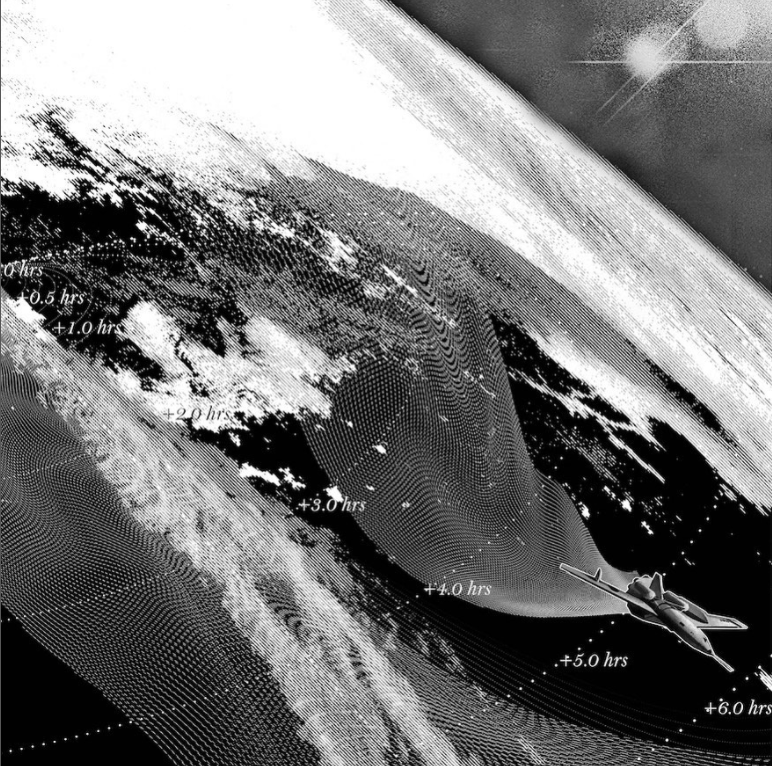
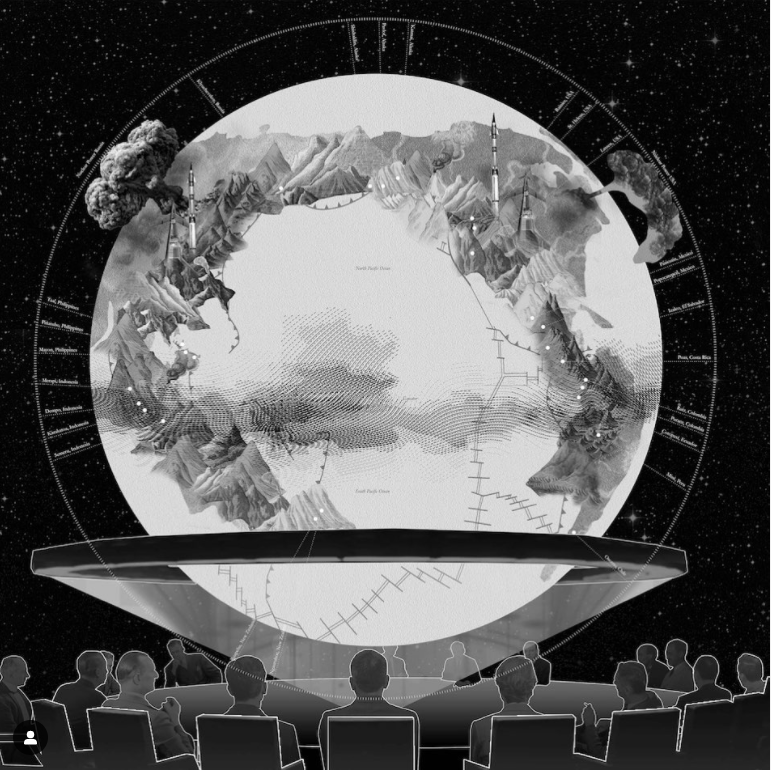
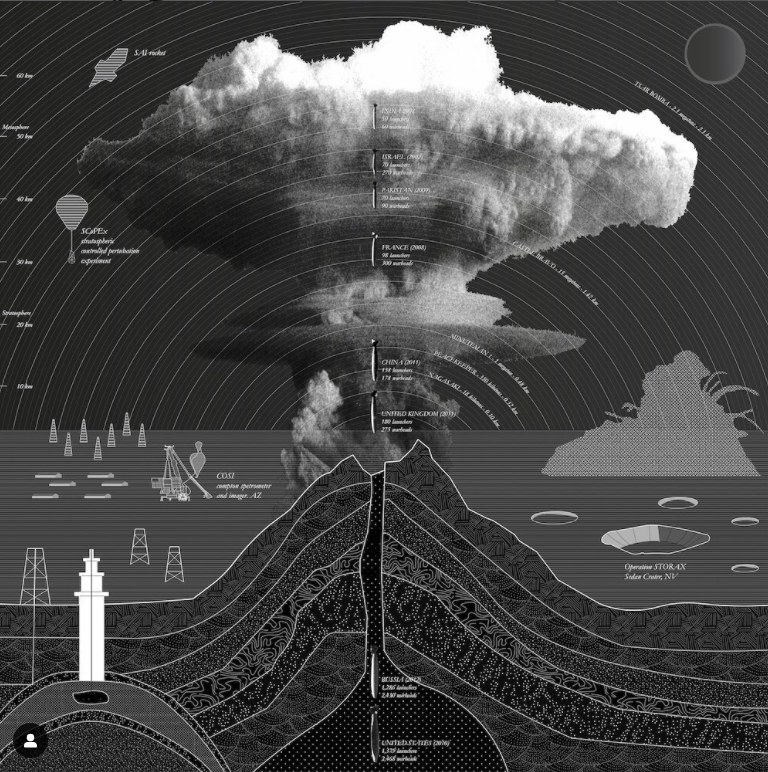
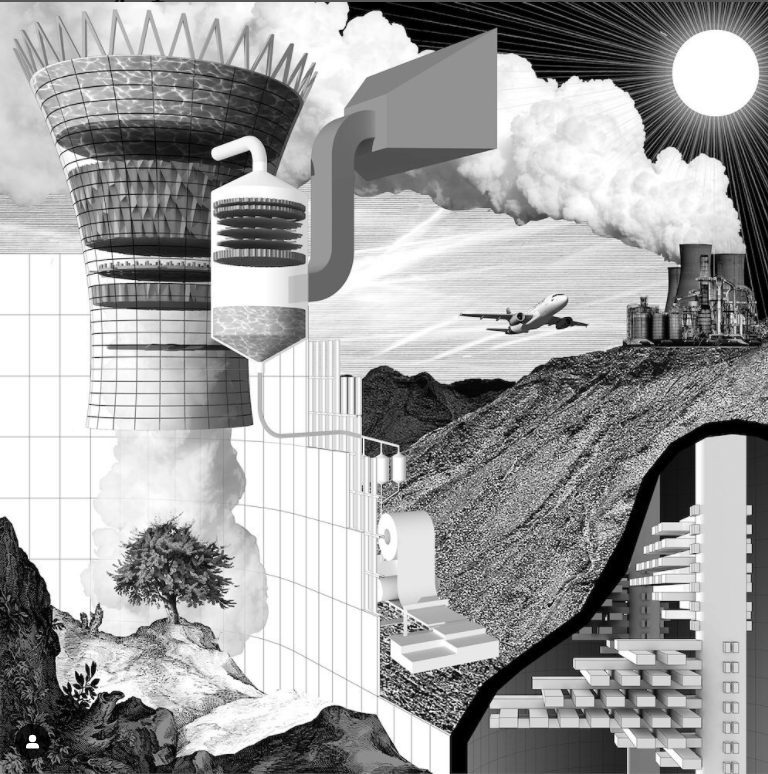
Operation Sulfur Storm detonates the Cold Warnuclear arsenal in the magma chambers of tropical volcanoes.Balloons, kites, drones, aircrafts, and navalartillery continuously spew millions of tons of tiny sulfate particles into thesky.硫磺风暴行动用冷战核武库引爆热带火山岩浆。气球、风筝、无人机、飞机和海军火炮不断向天空喷射数百万吨微小的硫酸盐颗粒。
A bright afterglow is a familiar sight atsunset.
The cloud gravitates into equatorial orbit.Saturn-like rings circle the Earth.
明亮的余辉是日落时熟悉的景象。
云在引力的作用下进入赤道轨道。类似土星的光环环绕着地球。
Clouds of ash deplete the ozone layer.
The exhaustion of the ultraviolet shield hasdire implications for life on Earth.
Aerosol particles make it hard to breathe.
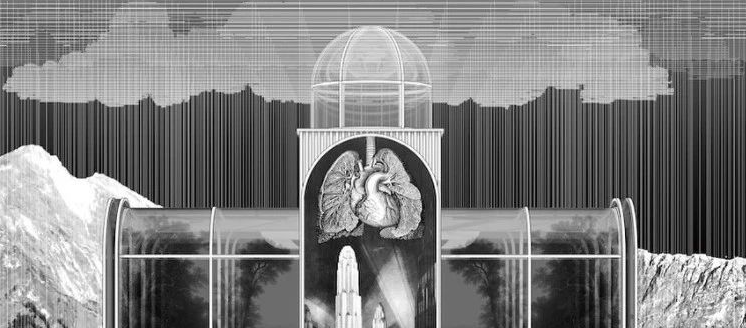
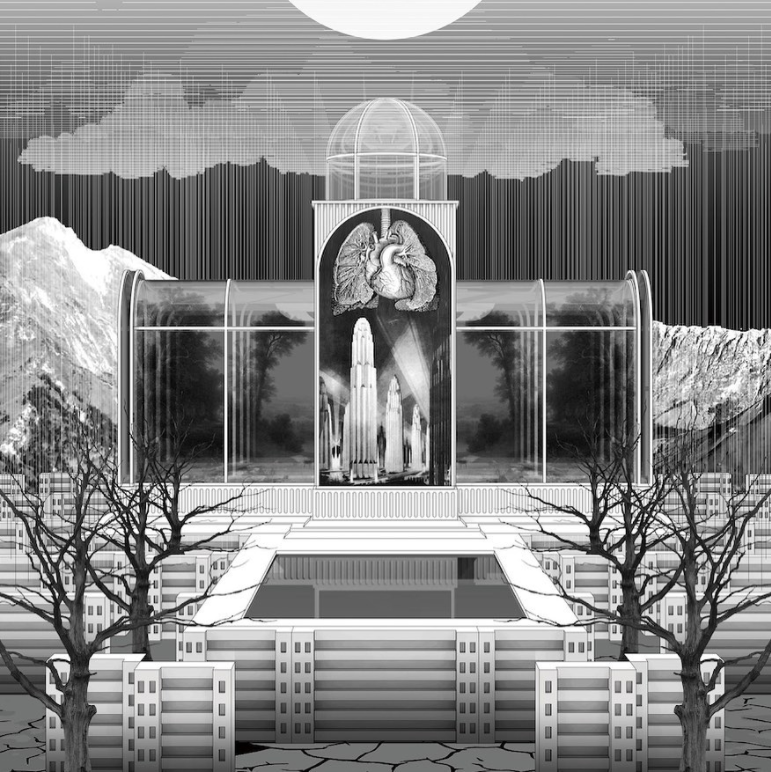
The Crystal Vivarium is a refuge for the one anda half-billion winners of geoengineering.
Four times this number are left standingoutside.
火山灰云消耗臭氧层。
紫外线屏蔽的耗尽对地球上的生命有着可怕的影响。
气溶胶颗粒使人难以呼吸。
水晶Vivarium是15亿地球工程获奖者的避难所。
四倍于这个数字的人被留在外面。The Continuous Conveyor Drywall City (CCDC)converts excess sulfur dioxide into synthetic gypsum—wallboard, plaster, andsoil additives.
Sulfur dioxide also inhibits photosynthesis. Thesame sulfate production line filters the air for sensitive species.
连续输送石膏板城(CCDC)将多余的二氧化硫转化为合成石膏墙板、石膏和土壤添加剂。
二氧化硫也会抑制光合作用。同样的硫酸盐生产线过滤空气敏感物种。
本文出处:
Le Lieu Unique, Tomorrows: Speculative Fictions for MediterraneanFutures, 2019