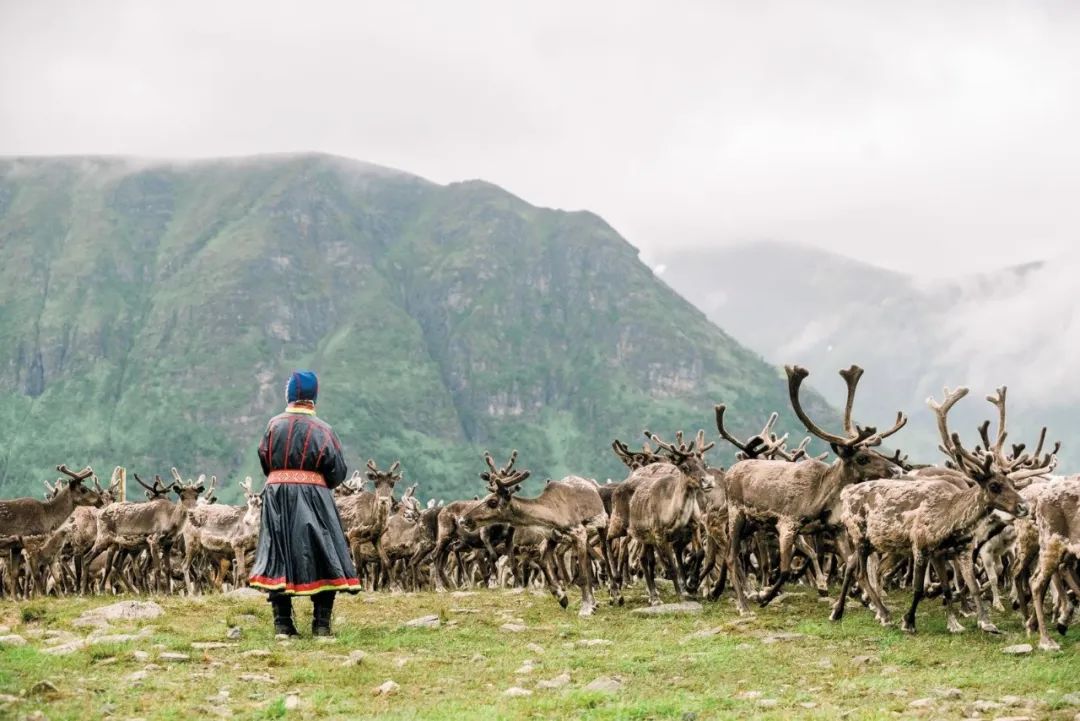
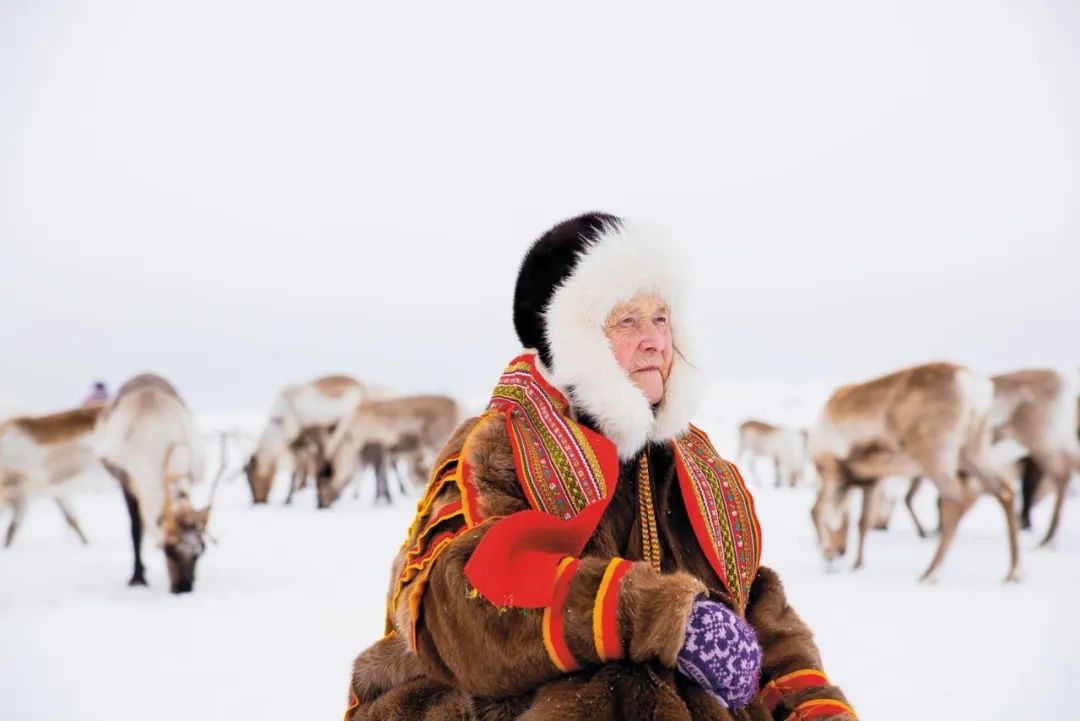
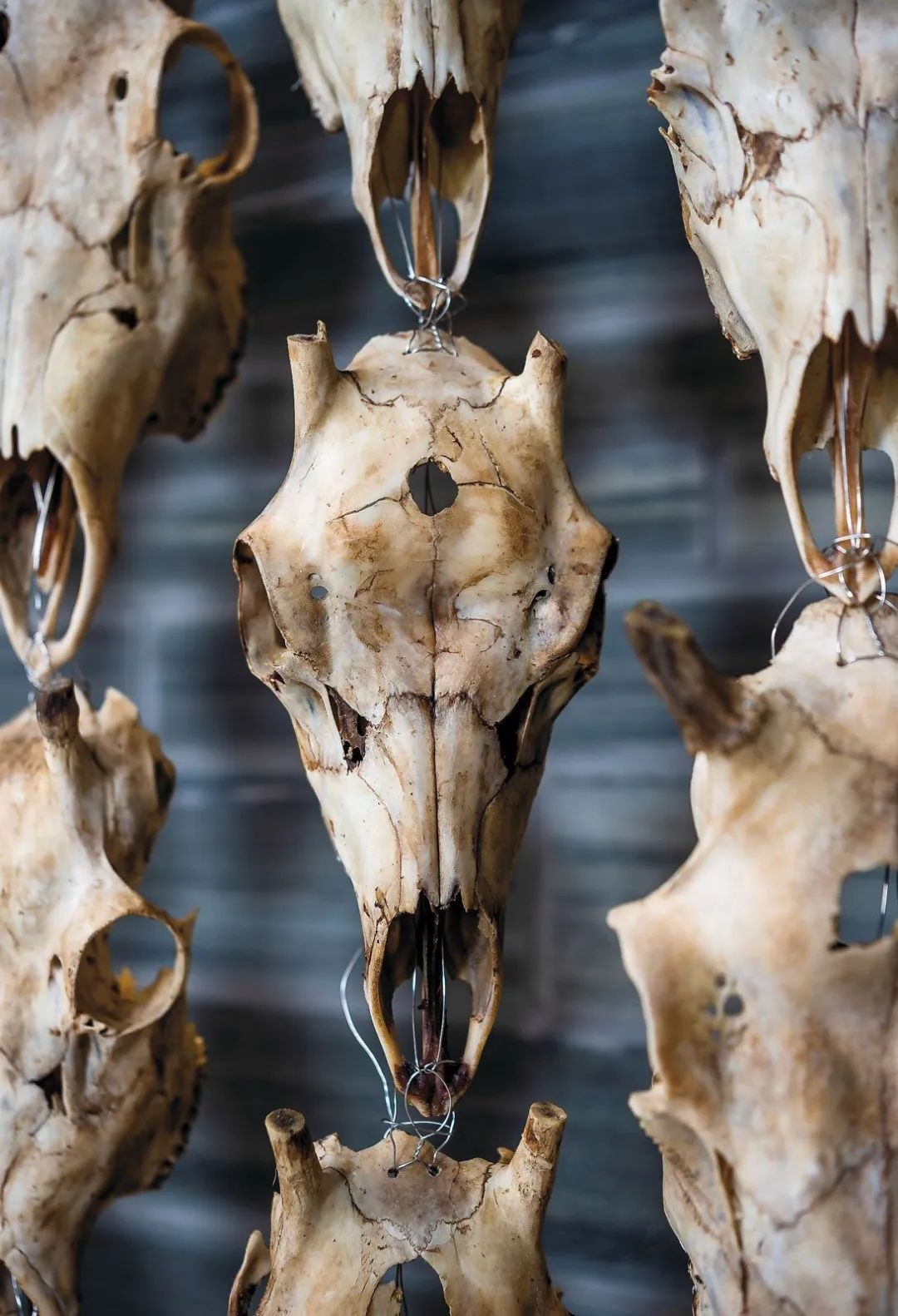
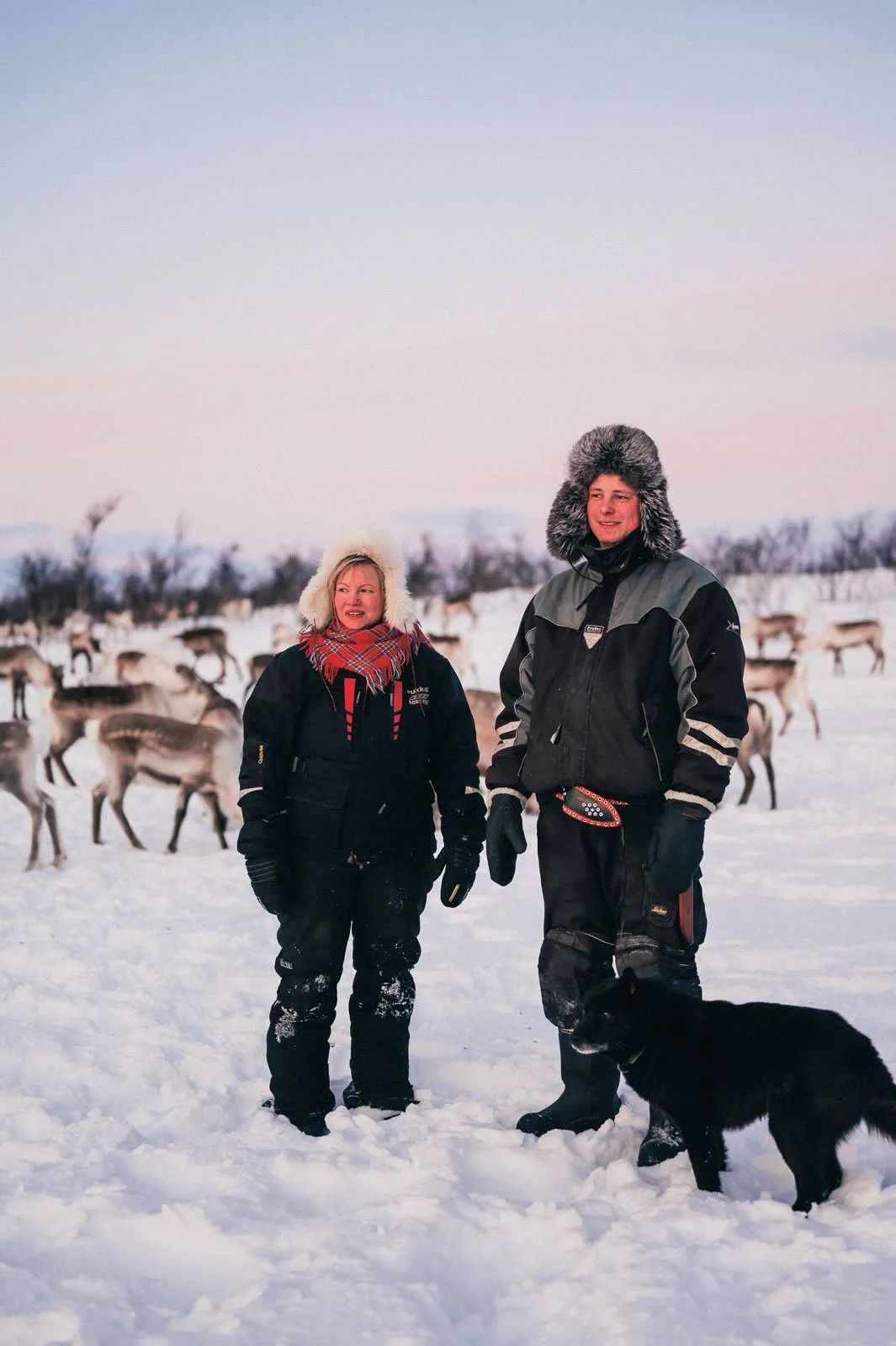
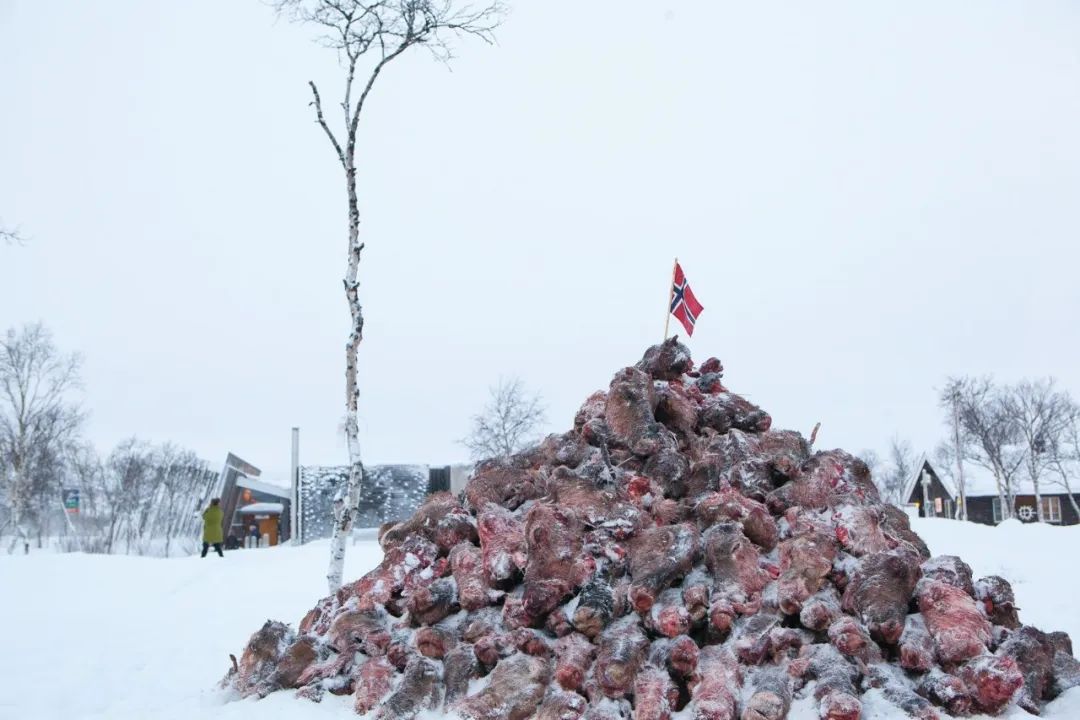
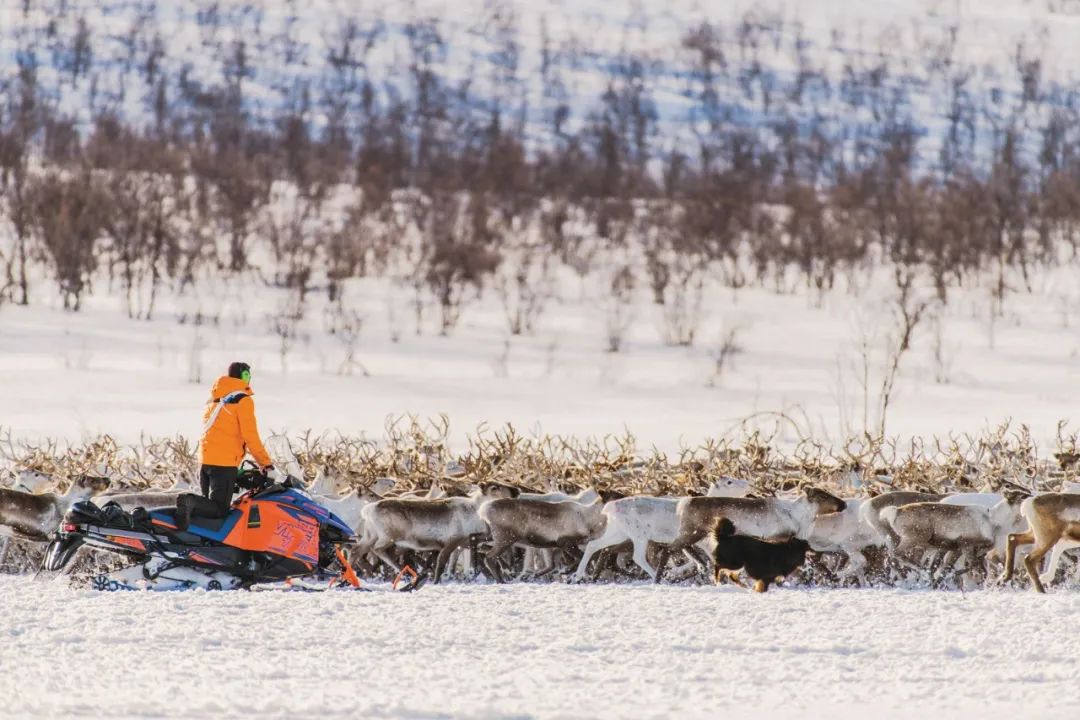
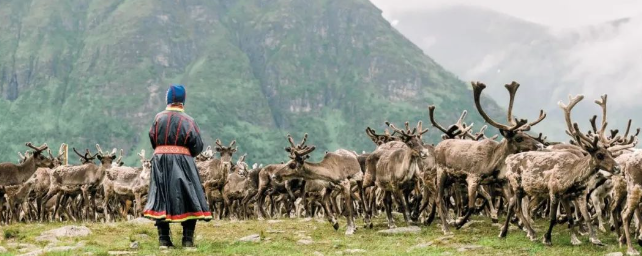
The SámiNarrative萨米人的故事Anna Souter 萨米人与驯鹿:互惠和相互依存Sámi people have an ancient reciprocal relationship withreindeer and the landscapes of the European Arctic. Against the backdrop of awarming world and the spectre of “green colonialism”, their way of life isunder threat.萨米人与驯鹿和欧洲北极地区的景观有着古老的互惠关系。在全球变暖和“绿色殖民主义”的阴影下,他们的生活方式正在受到威胁。There are many myths about how the reindeer and the Sámipeople formed such a close bond. Some say the reindeer were given to the Sámipeople by the sun. Others say that a reindeer god made the whole Arcticlandscape, giving its blood for rivers, its fur for grass, and its eyes for thestars. Others still tell a story of a daring quest to the land of the stonegiants, a romance, and a herd of reindeer as a dowry from the giants.关于驯鹿和萨米人如何建立如此紧密的联系,有很多神话。有人说驯鹿是太阳送给萨米人的。也有人说,驯鹿之神创造了整个北极景观,以它的血为河流,以它的毛皮为草,以它的眼睛为星星。其他人则讲述了一个大胆探索石巨人土地的浪漫故事,将一群驯鹿作为巨人的嫁妆。Reindeer herder Nils Peder Gaup describes a powerful taleabout a reindeer that approached a Sámi man and asked for his protection. Apartnership was formed. For centuries, Sámi people have guarded the reindeerfrom predators and ensured they have enough to eat. In return, the Sámi havereceived the reindeer’s gifts of furs, meat, and bones, utilising them forwarmth, food, and art. This is a simple story, but it is powerful because itundermines western historical, anthropological, and scientific tropes abouthuman beings “taming” wild animals; instead, Sámi culture is based onhuman-nonhuman reciprocity and interdependence.驯鹿牧民尼尔斯·佩德·高普描述了一个关于驯鹿接近萨米人并请求保护的有力故事。驯鹿与萨米人从此建立了伙伴关系。几个世纪以来,萨米人一直保护驯鹿免受掠食者的侵害,并确保它们有足够的食物。作为回报,萨米人收到了驯鹿的毛皮、肉和骨头作为礼物,将它们用于取暖、食物和艺术。这是一个简单的故事,但它很有力,因为它破坏了西方关于人类“驯服”野生动物的历史学、人类学和科学隐喻;与西方的叙事相反,萨米文化建立在人类与非人类的互惠和相互依存的基础上。KAREN ANNA ANDREINDEER凯伦·安娜和驯鹿Reindeer herding is the beating heart of Sápmi, the Sámicultural region, which covers much of the northernmost parts of Norway, Sweden,and Finland, as well as part of Russia. Centuries-long colonial campaigns haveattempted to portray these landscapes as empty, pristine wildernesses. Thiscarefully constructed fantasy has allowed successive generations of rulers andsettlers to plunder Sápmi for its so-called resources, including oil, minerals,and timber. But in reality, the Sámi have been living in and managing theEuropean Arctic for centuries. The land is truly neither empty nor wild. Peopleand reindeer weave a delicate balance across the Arctic’s diverse ecosystems.驯鹿放牧是萨米文化区Sápmi跳动的心脏,该文化区覆盖了挪威、瑞典和芬兰三国最北部的大部分地区,以及俄罗斯的部分地区。长达几个世纪的殖民运动试图将这些地区的景观描绘成空旷的原始荒野。这种精心构建的幻想成功地制造出一批统治者和定居者来掠夺Sápmi的所谓资源,包括石油、矿产和木材。但实际上,几个世纪以来,萨米人一直生活在并经营着欧洲北极地区。这片土地诚然既不空旷也不荒野。人和驯鹿在北极多样化的生态系统中营造出微妙的平衡。Sámi people are still living with the scars of racism anddiscrimination faced across the region for many years. The governments ofNorway, Sweden, and Finland have each previously implemented culturalassimilation programmes, actively attempting to erase Sámi languages andcultural practices, forcing members of Sámi communities to relocate, to give uptheir livelihoods, and to adopt western styles of living and worshipping.Although these programmes were rescinded a matter of decades ago, Sámi peoplecontinue to feel the damage. Nordic governments and societies are only recentlybeginning to recognise and atone for the years of state-sanctioned racism;meanwhile, prejudice and discrimination against Sámi people and ways of lifeare still common.萨米人仍然生活在该地区多年来面临的种族主义和歧视的创伤中。挪威、瑞典和芬兰政府此前各自实施了文化同化计划,“踊跃”地试图消除萨米语言和文化习俗,迫使萨米社区成员搬迁,放弃生计,并采用西方的生活方式和宗教仪式。尽管这些计划在几十年前就被取消了,萨米人仍然在经受这些计划带来的伤害。北欧政府和社会直到最近才开始承认和弥补多年来国家认可的种族主义;与此同时,对萨米人及其生活方式的偏见和歧视仍然普遍存在。In Norway, for example, although reindeer herders receivesome state support, there is also an overriding narrative that reindeer herdingis bad for the ecosystems of Sápmi. Some argue that, much like the deer kept onScotland’s highlands, reindeer are overgrazing the tundra, causing damage andpreventing new trees from growing. On the face of it, from a sub-Arcticperspective, this seems like a cogent argument. Rewilding is seen by many as apossible means of stemming the tide of the climate crisis. In many placesacross the world, the regeneration of forests is seen as a positive steptowards reparation; we all know of the ability of trees to extract carbondioxide from the atmosphere.例如,在挪威,尽管驯鹿牧民得到了一些国家支持,但也有一种压倒一切的说法,即放牧驯鹿对Sápmi的生态系统不利。一些人认为,就像在苏格兰高地饲养的鹿一样,驯鹿过度啃食苔原,造成破坏并阻止新树生长。从表面上看,就亚寒带的角度而言,这似乎是一个有说服力的论点。许多人认为,野化是遏制气候危机浪潮的一种可能手段。在世界上的许多地方,森林的再生被视为朝着修复迈出的积极一步;我们都知道树木从大气中提取二氧化碳的能力。But Sápmi is not the same as Scotland. The Arctic is warmingfour times faster than the rest of the planet and the treeline is creepingnorthwards. Sápmi is, or should be, snow-covered for much of the year. The snowreflects the sun’s heat, creating cycles of cool air. Trees, however, interruptthe sparkling white landscapes with dark patches. These absorb the sun’s heat,melting the surrounding snow and contributing to the warming climate on bothlocal and global scales. This has a double impact in the Arctic because if thepermafrost begins to melt, ancient repositories of methane and otheratmospheric gases are released, to devastating effect. Reindeer herding is alight-touch way of keeping the tundra and the permafrost intact, practiced bypeople who have held a reciprocal and intimate relationship with this landscapefor centuries.但Sápmi与苏格兰不同。北极的变暖速度是地球其他地区的四倍,树木线正在慢慢向北移动。Sápmi一年中的大部分时间都、或应该被白雪覆盖。雪反射太阳的热量,形成冷空气循环。然而,树木用深色斑块打破了闪闪发光的白色景观。它们吸收太阳的热量,融化周围的积雪,并在当地和全球范围内造成气候变暖。这对北极有双重影响,因为如果永久冻土开始融化,久远前储存的甲烷和其他大气气体就会释放出来,造成毁灭性的影响。驯鹿放牧是保持苔原和永久冻土完好无损的一种巧妙方式,由几个世纪以来与这片景观保持着互惠和亲密关系的人们实践着。INSTALLATION PHOTOPILE O’SÁPMI AT THE NATIONAL MUSEUM. PHOTOGRAPH MICHAEL MILLER/OCA.“Pile o’Sápmi”的安装照片,由Michael Miller/挪威当代艺术办公室(OCA)拍摄。这是一件萨米人艺术家Máret Ánne Sara创作的艺术品,以此抗议挪威政府在芬马克强行屠杀属于土著萨米牧民的驯鹿。 艺术项目:Pile o'SápmiThe Norwegiangovernment supports reindeer herding to some extent, seeing it as an industrythat creates and supplies a market for reindeer meat, but it operates a strictsystem of quotas and controls. Since the introduction of the Reindeer HerdingAct in 2007, the government has introduced heavy culling quotas for Sámireindeer herders, citing environmental damage caused by overgrazing. Under theact each herder is required to cull a large percentage of their herd, hittingyounger herders particularly hard by reducing already-small herds to sizes thatare not economically viable. The quotas have affected the family of Máret ÁnneSara, one of three contemporary artists representing Sápmi in thegroundbreaking Sámi Pavilion at this year’s Venice Biennale (the renaming ofthe Nordic Pavilion marks the first time that the Sámi people had beenrecognised as a sovereign people at the Biennale in a pavilion bearing theirname). Rather than submitting, Sara’s younger brother, Jovsset Ante Sara,decided to appeal the ruling in the courts.挪威政府在一定程度上支持驯鹿放牧,将其视为一个创造了并供应着驯鹿肉市场的行业,但它有着严格的配额和控制系统。自2007年引入《驯鹿放牧法》以来,政府以过度放牧造成环境破坏为由,对萨米驯鹿牧民实行了严格的扑杀配额。根据该法案,每个牧民都必须淘汰大部分牧群,将已经很小的牧群减少到经济上不可行的规模,这对年轻牧民的打击尤其严重。配额影响了Máret Ánne Sara的家人,她是在今年“威尼斯双年展”开创性的萨米馆中,代表萨米人的三位当代艺术家之一(北欧馆的更名标志着萨米人首次在双年展中拥有一座以他们的名字命名的展馆,被承认为主权民族)。Sara的弟弟Jovsset Ánte Sara没有屈服于《驯鹿放牧法》,而是决定向法院提出上诉。‘THE SÁMIPAVILION’ ARTIST MÁRET ÁNNE SARA AND HER BROTHER, JOVSSET ÁNTE SARA. PHOTOGRAPHBY NATIONAL MUSEUM/ANNAR BJØRGLI.“萨米馆”,萨米人艺术家Máret Ánne Sara和她的弟弟Jovsset Ánte Sara。照片由国家博物馆/Annar Bjørgli拍摄。“萨米馆”是由挪威当代艺术办公室(OCA)委托的一个项目,将威尼斯双年展的北欧馆改造成“萨米馆”,以庆祝土著萨米人的艺术和主权。Throughout a lengthyand expensive legal process (winning in both the local and provincial courts,but losing at a supreme court trial in Oslo), Sara has supported her brother byshowing solidarity and resistance through her artistic project, Pile o’Sápmi(2016-ongoing). In February 2016, Sara piled 200 reindeer heads outside theInner Finnmark District Court and topped the pile with a Norwegian flag. Thework refers to Pile o’Bones, the English translation of the Plains Cree namefor Regina, Canada, which itself suffered from the white settler policy ofcontrolling the Indigenous Canadian population by slaughtering millions of buffaloand piling their bones in unimaginably enormous heaps. Sara is attempting tohold the Norwegian government to account for essentially repeating devastatingcolonial events in the context of a 21st century nation that prides itself onits democratic values and its respect for human and animal rights.在漫长而昂贵的法律程序中(在地方和省级法院都胜诉,但在奥斯陆的最高法院审判中败诉),Sara通过她的艺术项目Pile o'Sápmi(2016-进行中)展示萨米人的团结与抵抗,以支持她的弟弟。2016年2月,Sara在芬德马克地方法院外堆放了200个驯鹿头,并在堆顶上安插了一面挪威国旗。这件艺术作品向Pile o'Bones致敬。Pile o'Bones(骨头堆)是加拿大的里贾纳市在平原克里语(一种土著语)中名称的英文翻译。殖民者通过屠杀数百万头水牛并将它们的骨头堆成难以想象的巨大山堆来控制加拿大原住民的人口,Pile o'Bones是加拿大原住民被白人殖民者压迫控制的象征。Sara试图让挪威政府—— 一个以民主价值观和尊重人权及动物权利为荣的21世纪国家——为本质上重蹈覆辙的毁灭性的殖民行为负责。This summer, whenvisitors enter the new National Museum in Oslo, they will be greeted by anotheriteration of Pile o’Sápmi, a flag made up of the skulls of culled reindeer.Each skull has a dark hole in the middle of the forehead. In normal small-scaleculls, individual reindeer would be picked out and killed by hand by theherder; the family would then use every part of the animal for food, clothing,and craft. In the government-mandated culls, reindeer are rounded up, forcedinto metal containers, and shot. The bodies are mostly taken to centraliseddepots to be frozen. This is environmental management on an industrialisedscale, riding roughshod over the Indigenous knowledge held and cultivated bythe Sámi people for generations. As Máret Ánne Sara puts it, “the method of themass culling was essentially a collective punishment” for the Sámi people. Thework’s inclusion in such a prominent position within the National Museum is alandmark moment, suggesting a rapidly growing awareness of problematic colonialapproaches to Sámi people.今年夏天,当参观者进入奥斯陆的新国家博物馆时,迎接他们的是另一幅Pile o'Sápmi,这是一面由驯鹿头骨制成的旗帜。每个头骨的前额中间都有一个黑洞。在正常的小规模扑杀中,个体驯鹿会被牧民亲手挑选出来并杀死;然后,这个家庭将使用动物的每一部分作为食物、衣服和手工艺品。在政府规定的扑杀中,驯鹿被围捕,强行装入金属容器,然后射杀。尸体大多被带到集中的仓库进行冷冻。这是工业化规模的环境管理,是对萨米人世代保有和培养的土著知识的粗暴践踏。正如Máret Ánne Sara所说,对萨米人来说,“大规模扑杀的方式本质上是一种集体惩罚”。这件作品出现在国家博物馆内如此显眼的位置上时,是一个里程碑式的时刻,这表明人们对萨米人经受的有问题的殖民手段的认识正在迅速提高。PILE O’SÁPMI, INSTALLED OUTSIDE THE INNER FINNMARK DISTRICTCOURT, TANA, FEBRUARY 2016. PHOTOGRAPH COURTESY OF MÁRET ÁNNE SARA.2016年2月,芬德马克地方法院外的“Pileo’Sápmi”。照片由Máret Ánne Sara拍摄。 北欧地区对萨米人的殖民与歧视行为Sara’s work draws attention to ongoing colonial anddiscriminatory practices towards the Sámi people across the Nordic region.Governments continue their attempt to present the Arctic north as empty,presenting it as the perfect location for “green” industrial projects such aswind farms. Reindeer are nervous animals; their ancient migratory routes aredisrupted by unfamiliar sounds and surfaces such as the noise of the turbinesand access infrastructure such as roads and pylons. Sámi activists andpoliticians have referred to these projects as “green colonialism”.Sara的作品引起了人们对北欧地区持续针对萨米人进行的殖民和歧视行为的关注。各国政府继续试图将北极地区视为空旷地带,将其视为风电场等“绿色”工业项目的理想地点。驯鹿是易惊慌的动物;它们古老的迁徙路线被不熟悉的声音和地表(例如涡轮机的噪音和通路基础设施如道路和塔架)所破坏。萨米活动家和政治家将这些项目称为“绿色殖民主义”。It is widely agreed that Indigenous peoples are notresponsible for the climate crisis facing the global population. And yet, inSápmi as elsewhere, Indigenous people are taking the biggest toll. Renewableenergy projects are forced onto Sámi lands without consent. The Sámi Parliamentof Norway is consulted about these projects, but their findings and responsesare often overruled. In 2021, the Norwegian supreme court ruled that theNorwegian state’s licencing of wind turbines on sacred Sámi reindeer herdinglands around Fovssen in central Norway was invalid. Lawyers for the Sámiherders believe the court decision should lead to the 151 turbines being takendown; to date, the turbines still stand.人们普遍认为,土著居民不对全球人口面临的气候危机负责。然而,在Sápmi和其他地方,土著居民付出了最多。可再生能源项目在未经同意的情况下强行进入萨米人的土地。挪威萨米议会就这些项目进行了咨询,但他们的调查结果和回应经常被否决。2021年,挪威最高法院裁定,挪威政府获得的位于挪威中部福森市附近的、神圣的萨米驯鹿放牧地的风力涡轮机许可证无效。萨米牧民的律师认为,法院的判决应该导致151台涡轮机被拆除;迄今为止,涡轮机仍然存在。SPRING MIGRATION WITHREINDEER与驯鹿一起的春季迁徙。 萨米人的团结与抵抗‘Theerasure of Sámi culture and livelihoods by the Nordic governments is shocking,considering the pride taken by those nations in their international reputationsas centres of democratic and humanitarian values.’“考虑到北欧政府因其作为民主和人道主义价值观中心的国际声誉而自豪,这些国家对萨米文化和生计的抹杀令人震惊。”It is ironic and sadthat Indigenous people are expected to give up their livelihoods and culturesin order to make way for “solutions” to a problem they did not cause,particularly when the climate crisis is already jeopardising the Sámi way oflife. For centuries, the Arctic winter has been reliably cold and dry;temperatures would drop far below freezing and stay there, preserving thick driftsof powdery snow. The reindeer would dig through the snow to access thenutrient-rich lichen that grows abundantly on the tundra. Recent winters,however, have been much less predictable, with temperatures fluctuating wildlyfrom day to day, sometimes rising above freezing and even bringing rain. Thesefluctuations cause the snow to thaw and refreeze, creating compacted layers ofice over the lichen and cutting the reindeer off from their food source. ManySámi families have been forced to start feeding their reindeer with pellets inthe winter months, driving for miles on snowmobiles to carry out thelabour-intensive process. 讽刺和悲伤的是,尤其是在气候危机已经危及萨米人生活方式的情况下,土著人民被期望放弃他们的生计和文化,以便为并非他们引起的问题的“解决方案”让路。几个世纪以来,北极的冬天可靠地保持着寒冷和干燥;气温会降至冰点以下并停留在那里,从而保持厚厚的粉雪。驯鹿会在雪地里挖掘,以获取在苔原上大量生长的营养丰富的地衣。然而,最近的冬天却很难预测,气温每天都在剧烈波动,有时会升至冰点以上,甚至会下雨。这些波动导致雪融化并重新冻结,在地衣上形成致密的冰层,切断了驯鹿的食物来源。许多萨米家庭被迫开始在冬季给驯鹿喂食饲料,骑着雪地摩托来回数英里进行着密集劳动。The ecologies of Sápmi are diverse and delicate, held in afragile reciprocal balance between people and reindeer. Frozen lakes andsnow-covered tundra might seem blank and wild to outsiders, but to many Sámipeople these landscapes are local, various, and intimately known. Theirmanagement requires local, intergenerational knowledge, and a step back fromextractivist and “green colonial” approaches.Sápmi的生态多样而精巧,依赖于人与驯鹿之间脆弱的互惠平衡。在外人看来,冻结的湖泊和白雪覆盖的冻土似乎是空白且荒芜的,但对许多萨米人而言,这些景观是当地的、多样的,并且是众所周知的。它们的经营需要当地的代际知识,而非采掘主义和“绿色殖民”。The Sámi people have a long history as land defenders andenvironmental protestors, making the forcible occupation of Sápmi by “green”industry and the accusations of ecological mismanagement particularly bitterpills to swallow. The erasure of Sámi culture and livelihoods by the Nordicgovernments is shocking, considering the pride taken by those nations in theirinternational reputations as centres of democratic and humanitarian values.萨米人有着悠久的作为土地捍卫者和环保抗议者的历史,这使得“绿色”工业强行占领Sápmi以及对萨米人生态管理不善的指控尤其令人难以接受。考虑到北欧政府因其作为民主和人道主义价值观中心的国际声誉而自豪,这些国家对萨米文化和生计的抹杀令人震惊。Many Sámi artists, activists, and politicians believe in thepower of telling Sámi stories on the world stage, using platforms as diverse asthe Venice Biennale, social media, and international networks of Indigenouspeoples. They argue that external interest in the challenges faced by Sámipeople will put pressure on the Nordic governments to apologise for theircolonial histories and to put further sovereignty over Sápmi into the hands ofits traditional guardians. For Máret Ánne Sara, art is an important way ofsharing Sámi narratives: “We have stories about colonialism, land destruction,and existential exhaustion. These stories are important for other Sámi peopleand for people all over the world.” For many Sámi people, she explains, this ispart of a wider fight “to fill the information gap and reclaim reality.”许多萨米艺术家、活动家和政治家相信使用威尼斯双年展、社交媒体和国际土著人民网络等多种平台在世界舞台上讲述萨米故事的力量。他们认为,外界对萨米人面临的挑战的关注将迫使北欧政府为其殖民历史道歉,并将Sápmi的更多主权交到其历来的守护者手中。对Máret Ánne Sara来说,艺术是分享萨米人的故事的重要方式:“我们有殖民主义、土地破坏和生存枯竭的故事。这些故事对其他萨米人和全世界的人们都很重要。”她解释道,对于许多萨米人来说,这是“填补信息空白和还原真实”的更广泛斗争的一部分。GIRL IN HER GÁKTI,PART OF THE TRADITIONAL CLOTHING WORN BY SÁMI PEOPLE WHILE HERDING REINDEER穿着GÁKTI的女孩,这是萨米人在放牧驯鹿时所穿的传统服装的一部分。注释:*绿色殖民主义:当我们投资于更多的可再生能源和其他保护活动时,它往往以牺牲边缘化社区为代价,例如土著群体。一个典型的例子就是文章中的萨米人族群:挪威为风力发电提供了100多项特许权,允许风力发电厂建造在萨米人的土地上,严重影响了驯鹿迁徙和繁衍,使得萨米人无法在自己的土地上放牧驯鹿。*树木线:分布(纬度/海拔)最高的矮生树木的生长界限,超过这条界线,树木就不能生长。通常用来指高纬度的边界。树木线向北移动表示气候变暖,树木能生长的纬度变高。*采掘主义:这是从地球上提取自然资源以在世界市场上销售的过程,它存在于一个主要依靠开采自然资源以进行全球出口的经济体中。 原文作者:Anna Souter摄影:Ánne Kátjá Gaup翻译:张喆茗